A Dining Nook for the Space You Have
Plan a compact dining corner around everyday meals, easy seating and the route past the table.
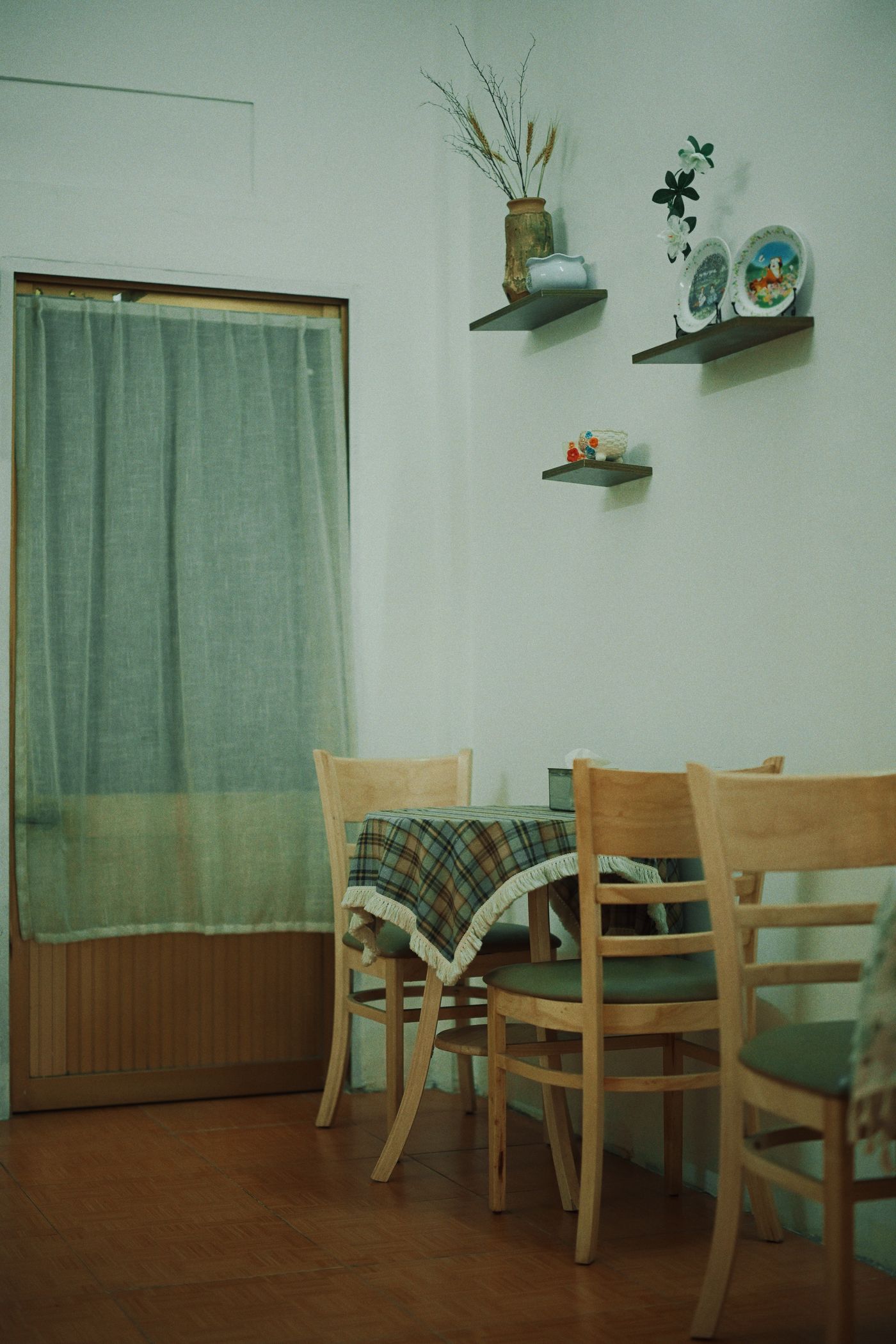
Two people can eat comfortably at a small table in a room with very little extra floor. The awkward part is getting those people to and from their seats with bowls, drinks and the occasional hot dish. A table squeezed against a wall can look perfectly placed before dinner. Once the chair is pulled out, it may block the way to the sink. A bench against the wall can free the aisle, but the person at its far end may spend the meal waiting for everybody else to get up.
The best dining corner is often the one with the most ordinary requirements. It needs to work when somebody is tired, when the table has a few things on it, and when the first person to finish wants to leave. If you decide which actions matter, the choice between a round table, a wall bench or a narrow rectangle becomes much easier.
Let the meal tell you where the table belongs
Stand where you normally set down a hot pan or fill a glass. Walk to the proposed eating area carrying an empty tray. Use the route you would take without thinking. If the tray passes close to a lamp, sofa arm or jutting corner, turn around and walk back with it. The return trip can reveal a pinch point that is easy to miss on the way out, particularly around a swinging refrigerator door.
A good location does not have to be the closest to the kitchen. In an open apartment, a table by the wall beyond the sofa may feel more comfortable if it keeps diners away from the busiest path. In a narrow kitchen, a table under a window can be awkward if reaching the blind means leaning over somebody else's plate. Count the trips you make through the space during a normal meal. Give the most frequently used route priority over the view of the table from across the room.
Imagine breakfast separately from dinner. A person drinking coffee before work may want the seat nearest the kitchen. Two people sharing dinner may prefer to face each other. Think about whether those uses require moving anything heavy. If the table has to be dragged out of its usual position every evening, try putting it permanently where it ends up most often.
Take the chairs for a walk
It helps to lay out the proposed furniture at full size. A cardboard rectangle on a spare table gives you a quick approximation of the top. Place the chairs around it. Pull each one back far enough to stand up without bracing yourself on the edge, then have somebody walk past. Test the chairs with the clothes you usually wear at home, including anything bulky you might leave on in winter. Try carrying a plate past a seated person as well.
A corner bench uses its footprint differently from a chair. It stays in the same place and can bring the table closer to the wall. The price is an entry route along one or both sides, with room for legs to get past the corner of the top. Sit at the inside end and get up while the other seat is occupied. If you have to ask the other diner to move every time, assign the outside seat to the person most likely to leave first. A short straight bench often gives two people more freedom than a tight corner arrangement.
Try every combination of chair and table before committing. Arms can collide with a deep apron, the frame that runs beneath the top. Wide chair feet can catch table legs even when both pieces look narrow. A pedestal table removes some of these conflicts but can put a broad base in the exact place you want to rest a foot. Keep the floor under the table clear of baskets until you know where people naturally sit.
If a wall limits access, use the wall for the side nobody needs to sit at. You can still pull the table away occasionally for guests. Leave enough room at the usable corners to put two chairs back without making each chair's movement depend on the other.
Choose a shape from the usable area
A round table makes it easier to step around the edge. It fits especially well where people approach from more than one direction. Two plates can sit opposite one another without anybody being assigned a corner. The same curve can create wasted slivers between the table and a straight wall. Check how far the table has to stand out before the people on the wall side can sit down.
A narrow rectangle makes good use of a straight wall. Its width is easy to check with everyday objects. Put two dinner plates on the temporary surface facing each other, then add cups and whatever serving dish you often use. If the plates fit but the salad bowl ends up balancing on a book, decide whether you would normally serve food in the kitchen. A narrower surface is practical when meals arrive already portioned. Households that like to keep dishes on the table should allow for them from the start.
A square table is useful when it needs to do different jobs on different days. It can make a generous surface for one person using a laptop while still turning into a table for two. If one edge faces a passage, softened corners may make it easier to get around. A foldable top can also help. Test the hinge and support mechanism before you buy and see whether the table is comfortable in both positions. Folded hardware can occupy space under the edge, and an extended table still needs a clear place for its extra chairs.
There is no need to choose the smallest piece that fits two plates. A few extra inches along an unused wall may cost nothing in circulation. A few extra inches across a narrow doorway can cost you every time somebody passes. Think in terms of the spare space along each side separately.
Decide what lives on the table between meals
Many dining corners also collect mail, support homework or become the place where someone leaves the groceries on the way in. These uses are reasonable. They become a problem when clearing them takes longer than preparing breakfast. Make the most frequent change easy. If the table doubles as a workspace, a portable file box can take the laptop accessories and notes at once. If mail gathers there, put the decision point nearby, such as a shallow tray by the entrance with recycling within reach.
Keep the center free during the week unless you use it for something specific. A small vase may sit happily on the far end of a table for two. On a smaller top, a deep bowl of fruit may take away the only place to set a second glass. Move decorative objects to a shelf or window ledge and bring them back when the table has space. A lamp placed elsewhere can give the nook atmosphere without asking you to rearrange the surface for dinner.
Give the wall behind the table a job only if the room needs one. A washable finish helps where chair backs rub against it. A narrow shelf can hold napkins, provided nobody hits their head on it when standing. Nearby hooks can hold a folded tablecloth or bags, provided they remain easy to reach around the chairs. Tape up a cardboard version before mounting anything in a tight corner. The parts of a room that look unoccupied at eye level can be quite busy when somebody sits down and stands up.
See what the nook feels like after dark
Daylight does a great deal of work at breakfast. By dinner a ceiling fixture in the middle of the room may leave the table in shadow, especially if the nook is tucked beside a tall cabinet. Before installing a pendant or buying a fixture, try a lamp you already own. Set it where it can light the table and check whether the bulb is visible from either seat. The aim is to see food and each other's faces without a glare in somebody's eyes.
A lamp behind the bench can work if it lights the wall and sends some light onto the tabletop. In a very narrow room, the light might have to come from above or from a nearby shelf. Take any floor cable out of the walking route. If an existing fixture is off center, view the space at night before assuming the table must move under it. A comfortable pool of light can make the nook feel settled even when it shares the room with a kitchen or a couch.
Curtains deserve a second look in a window nook. Closed fabric needs a place to fall, and curtains beside the table can pick up spills or get trapped against a chair. Open them and shut them with the room in use. In a rental, you can sometimes gain a little space simply by shifting the table or the seat a few inches away from the window.
Try the layout on an ordinary evening
Make a normal meal and carry it to the table the usual way. Leave coats, bags and whatever else would ordinarily be in the room. Notice which movement you have to think about. Perhaps one person moves sideways past the chair nearest the door. Perhaps a tall glass hits the shelf. Perhaps dinner is comfortable until somebody wants to refill a drink. Those are small observations with practical consequences.
Try one change before buying furniture. Turn a rectangle ninety degrees. Move a chair to the short side. Take the centerpiece away and give the lamp a new position. Each adjustment costs very little while the setup is provisional. Keep whichever arrangement lets people sit, eat and leave without interrupting the room around them. The corner earns its place when it is easy to use on a quiet Tuesday as well as when there is time to set the table properly.