A Reading Lamp That Leaves the Rest of the Room Quiet
Use the position of your chair, the angle of a page, and a short evening test to choose a lamp that works in an actual living room.
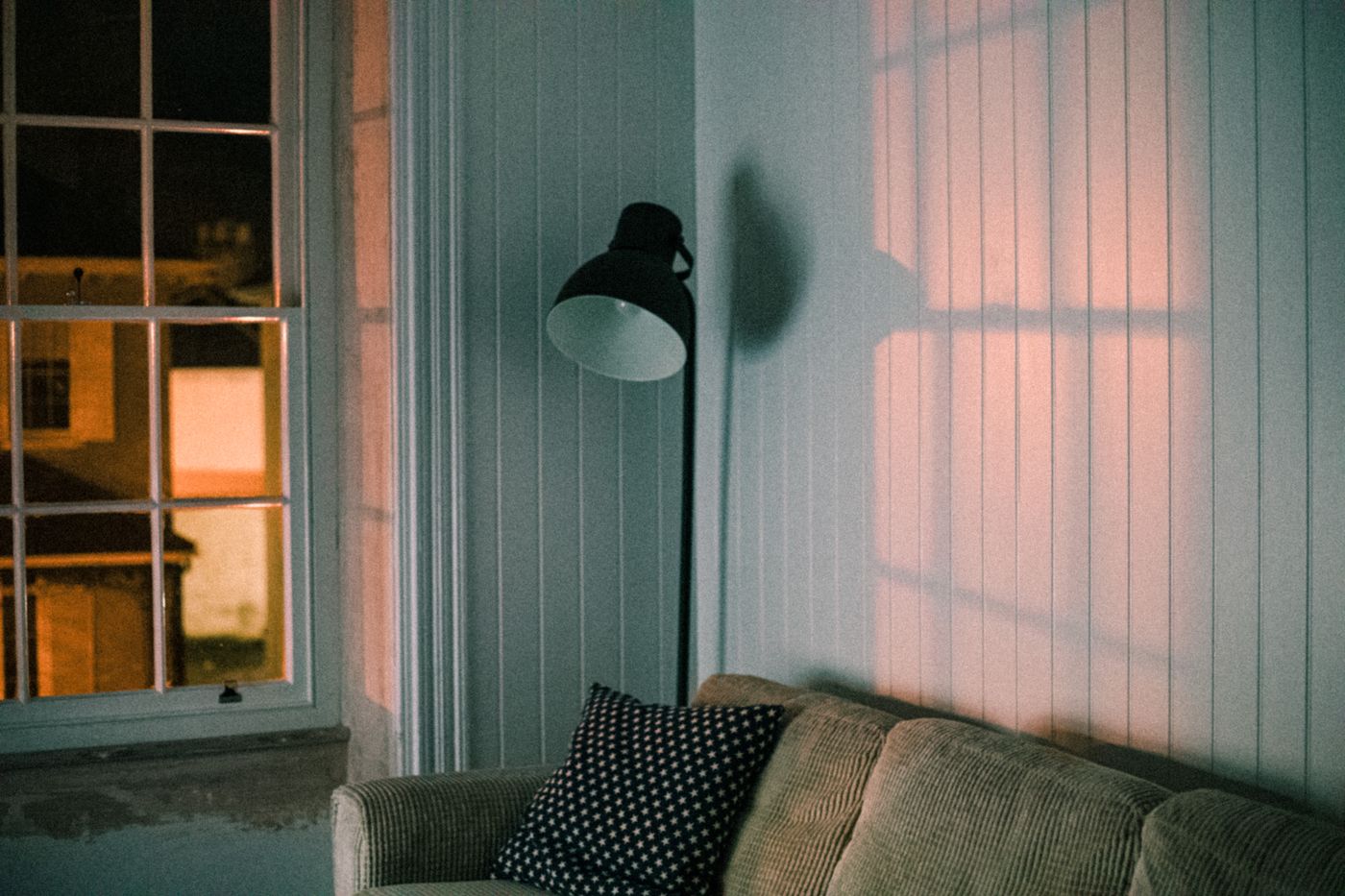
A book makes a surprisingly good light meter. Open one in your usual chair after dark and watch what happens as you turn a page. If the paper grows bright and then dull as it moves, or a silver streak slides over an illustration, the lamp may be pointed at the wrong spot. If the words are clear but you can see a brilliant bulb at the edge of your vision, the shade is doing a different job from the one you need. These details are hard to judge in a showroom where the ceiling lights are on and every chair faces an aisle.
Start with the reading you actually do. The person who sits upright with a hardback needs a beam at a different height from someone who reclines with a large magazine. A shared room adds another condition. Your pool of light may cross a television screen, wake a person on the other side of a small apartment, or illuminate a window so strongly that it turns into a mirror. A useful reading lamp satisfies the reader and fits the rest of that evening.
Find the page before you find the lamp
Sit down at the time you usually read. Put your feet where you naturally leave them, settle the cushion, and open something you often reach for. Ask someone to hold a lamp or use a spare lamp you can safely move. A small lamp on a stable side table gives you more information than standing in the middle of the room and pointing your phone flashlight down. Your book, shoulder, and hands all occupy space the beam has to navigate.
Try light from beside the chair, with the shade a little behind the front edge of your shoulder. Move it toward the back in small increments. If your head throws a shadow over the book, shift the light outward or forward. If you write notes, try the opposite side from your writing hand, then check how that position feels when you read without a pen. For a person who alternates between knitting and reading, the useful pool may extend farther down the lap than the book test suggests.
Repeat with two objects. Matte paper is forgiving. A glossy magazine shows reflections, and a dim electronic reader may reveal a bright reflected patch you would never see on a paperback. Tilt the material a little to see whether glare follows the page. If a tiny change clears the reflection, an adjustable head gives you room to adapt. If you have to turn almost sideways in the chair, the fixture probably belongs somewhere else.
Observe the shade from the sofa and the doorway
Most lamps look fine in a product photograph taken from eye level. From a low couch, an open shade can expose its bulb. While the test light is on, sit in the other seats. Look toward the lamp, then away from it at the television, mirror, and nearest window. Look from the doorway too. If the lamp sits directly behind the chair, a person entering may see straight up into an opening the reader never notices.
A deep opaque shade can keep the beam on the book and leave the ceiling dark. A light fabric shade lets some light spread into the room, which can make the difference between a comfortable room and a bright page floating in darkness. There is also a middle option. A shade with an opaque top and a slightly translucent side can cast a modest glow without exposing the brightest part of the bulb. The construction matters as much as the color. A white metal shade throws light from its openings, while white cloth may transmit it in several directions.
Consider how the shade fits the bulb. A long bulb projecting past the rim can be conspicuous even if the same shade works with a shorter bulb. Check the fixture's bulb type, size, and rating. In a shop, examine a fixture from the height at which people will sit and ask to see the shade switched on. At home, work through the same positions before deciding the light is too bright. Swapping the bulb for a dimmer one may help, but it will still be visible if its shape extends beyond the shade.
Make a choice about the space around the book
The book is only one surface in view. A dark wall beyond it makes a bright page feel more conspicuous, especially each time your gaze shifts to someone across the room. Try leaving a low background light on while you test. This can be as simple as a small shaded lamp at the far end of the couch or a separate lamp aimed toward a wall. If the room already has softly lit shelves or a mild ceiling light on a dimmer, try using that source at the same time. Hold off on buying a second lamp until you know whether the room benefits from it.
Bulb packaging gives you starting points. Lumens describe light output, while wattage describes power use. The amount that reaches a page also depends on the distance and on where the shade sends the light. A small lamp fairly close to the book can work well with a lower output bulb. A higher lamp or a diffuse shade may need more output for the same task. If you have a suitable bulb at home, write down its lumens and use your impression of it as a reference. That comparison is more useful than committing to a universal number before you have picked the fixture.
Color appearance has a place in the decision as well. Compare the test light with the lamps you keep on nearby. A warm light may blend easily into a room used for quiet evenings. Someone reading diagrams or sorting similarly colored threads may prefer a more neutral light. Test with familiar paper, textiles, or illustrations. A lamp that looks appealing on a pale wall may change how the colors in a project are distinguished.
Choose a lamp you can use without rearranging the furniture
A table lamp makes sense where a side table is stable, tall enough to bring the shade into a useful position, and wide enough for its base and whatever else goes on the table. Make a paper circle the size of the base and put it on the proposed table. Add a cup, glasses, and the book. If you find yourself setting the cup on the floor during this exercise, an extra small table or a floor lamp could solve more than a narrower base.
A floor lamp can tuck behind a seat, but look at the bottom as closely as the top. A broad base may need more depth than the gap beside a chair offers. Let a recliner travel through its full range and move a swivel chair in both directions before choosing a location. A tall lamp with a large cantilever needs a stable base and the manufacturer may specify how it can be positioned. Shortlist a fixture whose reach works with the base in the actual place it will stand.
Measure the route to an outlet along a wall or behind furniture, keeping the cord away from traffic, moving parts, and rugs. If you cannot place a fixture there without running a cord across a passage, try an alternate position or consult a qualified electrician about outlet placement. Look for a switch where you can reach it from the chair or on your way out of the room. An inline foot switch can be awkward behind the back leg of a sofa. A rotary switch hidden beneath a deep shade can be harder to find by feel. Those details are easy to miss if you have only tried the lamp while standing up.
Give the fixture three ordinary evenings
The first night, use the lamp with your normal room lights. Set a book open and read for a stretch without thinking about the fixture. Pay attention to where the book ends up. If you gradually lift it to chest level or shift it onto one knee, the beam could be better placed. An articulated head can usually move in small steps. A fixed lamp sometimes improves when its table moves a few inches or its shade rotates.
The second night, share the room. Ask the person opposite you whether they can see a bright opening, and look for reflections in the places both of you use. A shift that directs more light onto a book can also reveal the bulb to someone seated nearby. If the lamp supports dimming, test it with a compatible bulb at the settings you will use. A lamp whose lowest stable setting is still too bright makes a poor companion to a late film, even if it is excellent for daytime sewing.
On the third night, put everything away as you usually do. Check whether you can stand without brushing the shade or catching the cord. Turn the lamp off with the book in one hand. Look at the side table the following morning. These mundane actions expose problems a showroom never will. An evening lamp has earned its place when the chair, the page, and the switch are all where you expect to find them.