A Small Water Dish for Garden Birds
Choose a basin you can clean easily, position it with the birds in mind, and make a reliable daily routine.
The best place to start with a birdbath is the sink, hose or outdoor tap you'll use to clean it. How far is that from the proposed site? Can you carry the empty dish in one hand? Will anyone be willing to lift it when there is a little green film on the bottom and a twig lodged under the rim? A beautiful deep basin on a high pedestal may answer none of those questions well. A shallow dish on a sturdy support is easier to test, and it lets you improve the placement without moving a piece of garden furniture every time the sun shifts or a neighbour's cat appears.
Give a bird a place to stand and a route out
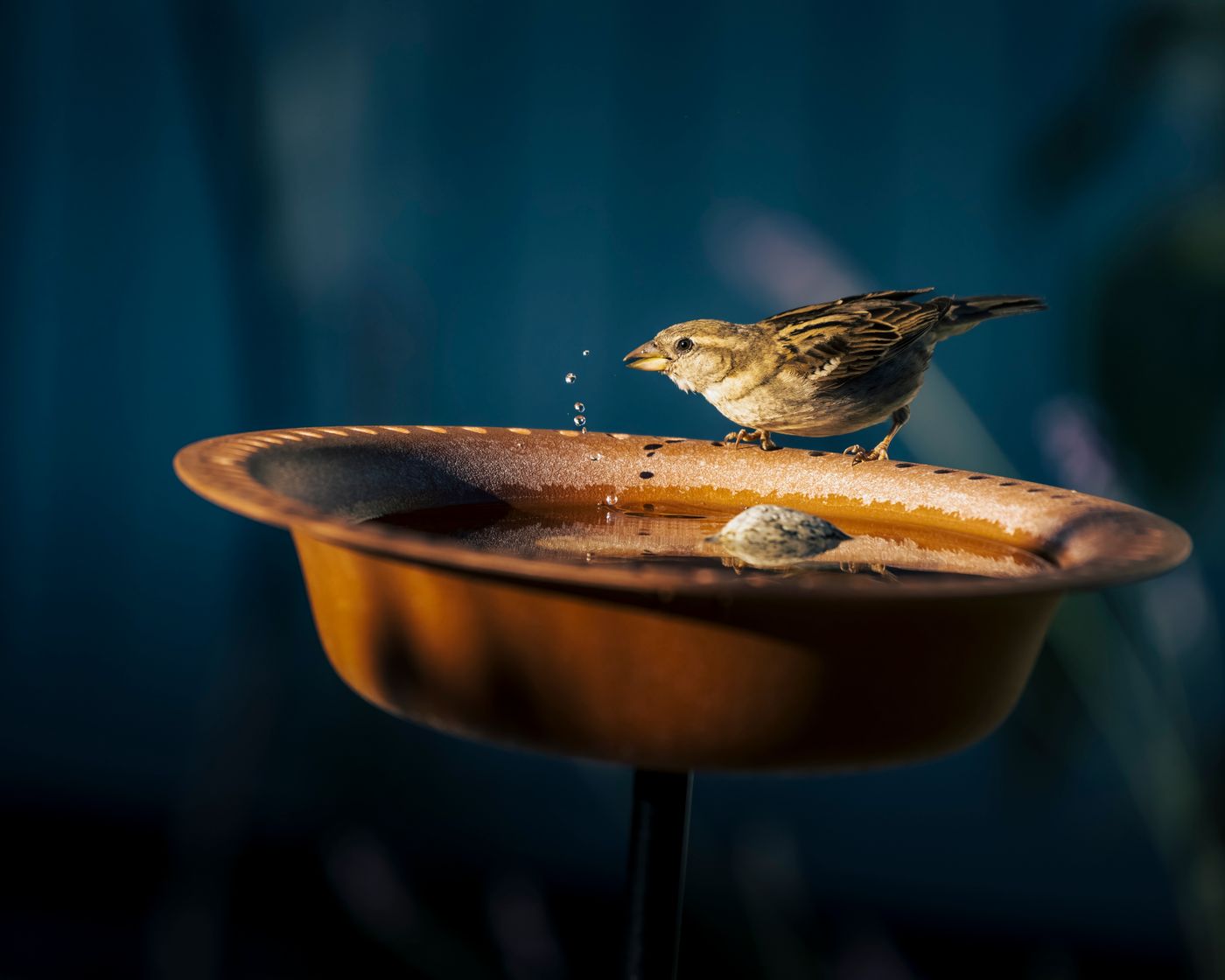
Look for a broad, gently sloping basin with a shallow edge and a surface that provides some grip when wet. A bird should be able to approach the water by degrees. Very slick bowls or steep sided containers are poor substitutes, even if they hold a perfect reflection of the sky. The Cornell Lab's birdbath guide favours shallow baths and suggests stones or other suitable footing when needed. If you add a stone, choose a stable one with a broad surface and put it where part stays above the water. Check that it cannot rock or roll, and lift it during cleaning. Skip small loose bits that shift, trap dirt, or make it hard to scrub the basin.
Set the empty dish on its support and press gently on different points around the rim. It should stay level when a bird lands on one side. Avoid a pile of blocks or a fragile pot turned upside down unless the resulting support is stable. Use a basin that has not held paint, pesticides or other inappropriate materials. Check for cracks, flaking surfaces or sharp edges before putting it out. Consider the floor below, especially on a terrace: water can spill and turn a smooth walking surface slick. Keep the dish well away from paths where feet or a wheel could catch it, and out of reach where a child might try to use it as a step.
Put in only enough fresh plain water to create shallow access from the edge. A basin with sides shaped like a soup bowl can have a deep middle even while the rim looks inviting. A wide stone or other stable footing can let birds drink without wading. Observe from a distance before adding anything else. If a basin has no safe shallow area, replacing it is easier than making a miniature rock garden you have to dismantle to clean. Leave out dyes, fragrance, ice melting products and other additives. If water freezes regularly, bring the emptied dish under cover rather than trying to keep it usable with a chemical.
Choose a view with somewhere to retreat
Find a site where an approaching bird can see around the bath and has access to a nearby branch or other safe perch. At the foot of a dense shrub, a dish may sit just where a roaming cat can wait unseen. In a completely exposed place there may be nowhere convenient to land and assess the situation. Positioning the bath with some open ground around it and useful cover beyond gives birds choices. Keep pets indoors or appropriately supervised around wildlife. If you see repeated stalking or a predator using the basin as a hunting spot, take down the bath and rethink the arrangement. Visits are not a sign that the location is safe.
Look at the area from a bird's approach rather than only from your kitchen chair. Reflections in nearby windows can make plants or open sky seem to continue through the glass. If collisions occur or the glass presents an obvious hazard, address the windows with appropriate outside markers or screening and consider another site for the bath. Keep the basin out of places where tools, hose spray, or ordinary foot traffic will repeatedly interrupt a visit. Overhead shade during the hotter part of the day can help keep the water cooler, but a spot directly below a busy perch may collect droppings. The best combination sometimes lies just outside the canopy rather than underneath its centre.
Look for a position you can observe quietly from indoors or from a seat at a reasonable distance. Don't judge a new site by whether a bird arrives on the first afternoon. Birds may approach cautiously or use the area at different hours. A high pedestal near a window can be tempting because it is easy for people to watch. A stable lower dish with good sight lines can be a better option if local conditions allow. Put ease of cleaning and a sensible approach ahead of getting a particular bird close to the camera.
Empty the dish instead of topping it up
Plan to check the dish daily when it is in use. Tip out the old water, remove leaves and dirt, rinse and refill with clean water. Scrub whenever residue forms, and don't wait for water to look dirty before changing it. Birds share the water, and a basin where old water sits can provide a place for mosquitoes to breed. Don't assume a dripper or fountain replaces cleaning. Moving water can be interesting to birds, but every part still needs to be accessible for maintenance. A plain dish in good condition often serves better than a complicated feature that is difficult to dismantle.
Use a dedicated brush and clean the basin away from surfaces used for preparing food. Wash your hands after handling dirty water or equipment. Choose where you pour the water so that it won't flow into a vegetable wash area, a shared walkway or a pet bowl. If you need to disinfect the dish, follow current guidance from a local wildlife or public health authority and rinse it thoroughly as directed before reuse. Some material finishes cannot be cleaned thoroughly once they become damaged. Replace a dish with cracks or flaking material rather than trying to keep dirt out of places you can no longer scrub.
The most useful test of the routine is an inconvenient day. Picture the morning when you have ten minutes to get out of the house and it's raining. Can you empty the dish without finding a new tool or lifting a heavy stand? Is there somewhere safe to put it upside down if you're leaving for a few days? A reliable arrangement has an easy way to stop offering water when no one can clean it. Before a trip, empty the dish and store it so it cannot collect rain. Give a helper an explicit routine if you intend to leave it in service; refilling it when it looks low isn't enough.
If the bowl is difficult to pick up without putting your fingers in the water, try a lighter model with a shaped rim you can grasp securely. A spare clean dish of the same size can make it possible to swap bowls and leave one to dry under cover. Check the support each time you put one back. Grit or a trapped leaf underneath can make a previously steady dish rock.
Know when to put it away
Wildlife health guidance can change during an outbreak. If you find sick or dead birds, stop offering shared water and check with the relevant local wildlife authority for reporting and cleaning instructions. Avoid touching a sick or dead bird with bare hands. The Cornell Lab's avian influenza guidance explains why decisions about shared water can differ when you keep poultry or other domestic birds. Keep wild birds away from domestic bird food and water and use advice from your local animal health authority. Don't try to compensate for an unsuitable site by cleaning more frequently while leaving the underlying problem in place.
In freezing weather, remove a dish that could crack or create ice on a walking surface. In a spell of exceptional heat, a shaded site and frequent checking may be more practical than increasing the depth. If you have no way to keep the bowl clean, leave it empty until conditions improve. Nearby plants can continue to offer shelter, perches and other resources independently of the dish. A water feature is one possible addition to a garden, and there are times when not offering it is the better decision.
Observe the visits without arranging them
For a week, make a few brief notes from a distance: time of day, weather, what birds did before approaching, and whether they drank, bathed or stayed on the rim. Note changes in water level separately from observed visits; heat and splashing can both make a dish empty faster. If birds repeatedly approach but leave when a dog goes out, changing the time or site may help more than replacing the dish. If the first point becomes hot or gathers debris, try moving it a short distance and compare what happens under similar conditions. Change one thing at a time so your notes tell you something useful.
It's possible that a well placed bath will have only the occasional visitor. That's an acceptable outcome, especially when there are other water sources nearby. There is no need to bait the area or approach the birds to make the experiment more satisfying. The test is whether a bird that does arrive finds a firm edge, fresh shallow water, and a straightforward escape route. The other test happens after it leaves. If the dish can be rinsed and refilled before the kettle finishes boiling, you'll probably still be looking after it when the novelty has worn off.