Pendants Above a Worktop People Gather Around
Choose the view, the pool of light, and the number of fixtures by trying the arrangement at the counter and from the next room.
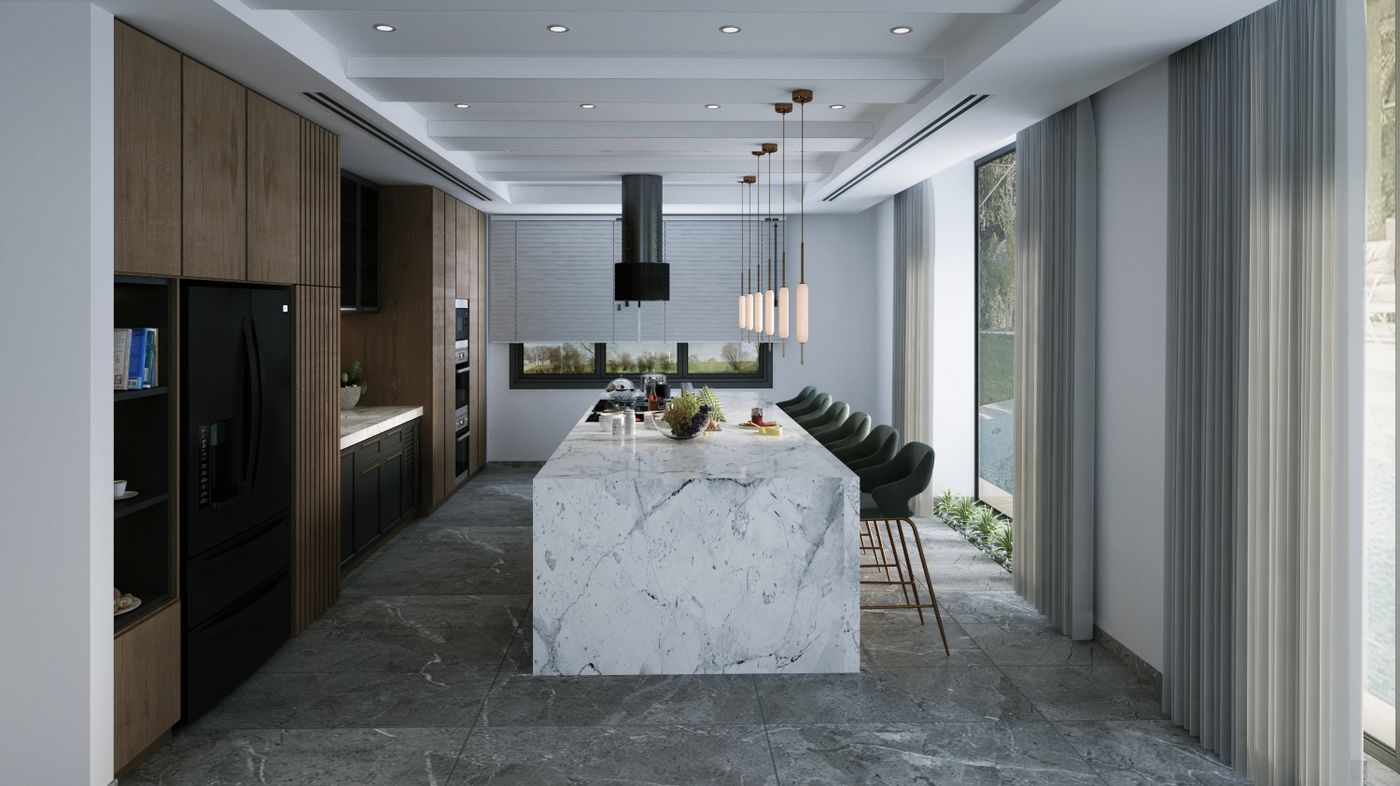
A row of pendants over a kitchen island looks orderly when it is photographed from the middle of the room. Stand at the end of the island and the same lights line up one behind another. Sit at the counter and the first shade may interrupt your view of the person working across it. Move to the dining table and all three bulbs may be visible beneath the rims. There are at least three useful viewpoints in that room. Start with the ones you occupy instead of the one that would make the clearest photograph.
Write down how the worktop is used. There may be a long stretch for preparation, a stool where someone reads, and an end that serves as a landing place for bags. One part may need more light at night than the others. Another may already have a wall light that does its work well. Look at the room with your present lights switched on, then switch off those you would not normally use. The new pendants will join the way the room is already lit. Make a place for them in that arrangement.
Begin with the view through the room
Measure the counter and draw it in relation to the surrounding furniture. Mark the seat heights as well as the main standing positions. A person at a high stool sees a shade from a different position than someone at a dining table. Check whether the counter is visible from the entrance. Where a fixture becomes part of a long view, its apparent size and the empty space around it matter as much as its position over the worktop.
Make light paper cutouts the size of the candidate shades. Have someone hold them safely at a representative position for a quick visual check or transfer the proposed outlines to a photo taken from your usual viewpoint. Avoid hanging temporary objects in a way that could fall or contact existing fixtures. Try looking from both ends of the worktop. The outline of a broad low shade may be welcome in a room with a tall ceiling. The same shape could occupy the line between seated and standing people in a shorter room. Raise or lower the drawing and look at the space between the outline and the furniture behind it.
Consider the shape of the shade in the directions people see it. A long narrow fitting has a small profile from one end and a larger one from the side. A rounded opaque shade presents more nearly the same area as you move around it. Clear glass may preserve a view through the upper part and still leave the bulb conspicuous against a dark wall. If the shade overlaps a window in the doorway view, see how the room feels when the fixture is dark as well as when it is lit.
Find the light that needs to reach the counter
Stand where you cut or measure ingredients, and note where your shoulders cast a shadow with the existing lights on. Set out the board or bowl you use most and look at its surface. Is the immediate area hard to see because you stand between the main light and the counter? A lamp directly above or slightly ahead of the place you use can affect that shadow. An arrangement centered on the island may still leave an active stretch of counter at one end in comparatively little light.
Compare the way different shades send light. An opaque shade concentrates light at its openings. A translucent one can brighten nearby surfaces and make the fixture more visible from other seats. A diffuser can soften a direct view of the light source. Examine the actual fixture or a good demonstration if you can. The amount of light reaching a counter depends on its output, the shape and finish of its shade, and the distance between them. Product photographs often use exposure settings that make a very bright bulb and a gently lit surface both look acceptable.
If you are planning fixtures that take replaceable bulbs, check the manufacturer's specifications and the bulb shapes they allow. A bulb that extends below the shade can change the view of the fixture dramatically. Integrated fixtures have their own output and compatibility information. Ask a qualified electrician or lighting professional to explain which options can work with the wiring and controls you have. If the lights will be dimmed, ask for a demonstration with compatible controls where possible. A pleasing low setting is useful when the counter changes from a working surface to a place for a drink.
Check the worktop for reflected glare
Light can reach your eyes by reflecting off the counter as well as directly from the fixture. If the surface is glossy, use one of the lights you already have and watch the reflected spot while you move a few inches. Look from the end where people sit. A sharp reflection that misses your standing position might be especially visible across the counter at a low angle. If you have samples of proposed surfaces, put the glossy and quieter finishes near each other under the same light.
Consider objects beyond the counter. Glass in a cabinet door can reflect a row of points. At night, a dark window may reflect a whole fixture. A television across an open room can pick up a bright spot in an otherwise dark picture. If one reflection matters, take a photo showing the path from the light to the reflected surface and the viewer. Discuss moving or shielding the fixture with your electrician. A different shade or a modest adjustment to the location can make more sense than changing the counter finish.
Compare a surface while it is clear and while its normal objects are there. A pale matte cutting board can reduce the effect of reflection where you do most preparation. At the far end, the surface may stay bare, making any reflection easier to see from the next room. Put a cup or a sheet of plain paper on the proposed work area to judge how easy it is to distinguish edges and details. The test tells you something about how light works in the room, even if you cannot exactly reproduce the new fixtures.
Choose the number of fixtures with the objects around them
Two or three individual pendants can mark the length of a counter. A single long fitting can cover a similar area with a different appearance. Look at the ceiling plane and the other objects in view. A row of cabinet pulls, mullions in a window, and a line of pendants all create repeated intervals. One additional row can make a room look pleasantly ordered. In another room, a large simple form might give the eye a place to stop. Try both arrangements on the drawing without changing the surrounding furniture.
Allow for the space outside the fixtures as well as between them. If a shade sits very close to a cabinet, the clear gap shown in the catalog image may be much smaller in your room. A fixture near the end of an island may appear directly above a main path from one viewpoint. Consider doors that open, objects that people lift onto the worktop, and how the shades will be cleaned or serviced. Tell your installer if a particularly tall person uses the counter or if stools invite people to stand close to a low light when they get up.
Where several lights share one counter, check whether each will do roughly the same job. Two matched lamps may look balanced, while only one sits above the part where food is prepared. A different light source can help the working end if the visual arrangement is worth keeping. Some kitchens make more sense with pendants over the social area and task light from a separate fixture at the worktop. Treat their jobs as part of a single plan and compare what the room looks like with each light operating alone.
Look at the ceiling from the room next door during the day. A pendant canopy and its cord will remain visible when the shade is off. Ask to see those parts as well as the shade, especially if you are considering two fixtures with different lengths. A ceiling beam, sloped surface, or old fixture position can change the appearance of the proposed arrangement. Make a note of these constraints so the electrician can discuss compatible mounting options before the fixtures are ordered.
Bring the electrician a record of the room in use
Prepare a sketch with the counter edges, ceiling height, nearby objects, and approximate position of the preferred shades. Include a photo from the work position, the closest seated position, and the doorway. Share the full fixture dimensions and product information, and let a qualified electrician confirm the installation details and clearances. Describe whether the lights should normally operate together and whether other light sources stay on. These notes give the installer enough context to tell you if a small change in position would help.
Once the lights are installed, use the room for a meal rather than judging only the bare counter. Prepare something with the usual objects around you. Ask somebody at the stool whether they can see the people they talk to and whether a bulb appears in their view. Look at the counter after dark from your normal seat in the next room. The lights can be distinctive and still leave conversation and work undisturbed. On a quiet evening you should be able to use the part of the counter you need, see what is in your hands, and look up without the fixture taking over the view.