Three Pots of Herbs Within Reach of the Kitchen
Choose herbs you already cook with, keep different watering needs apart, and grow enough to pick a little at a time.
A balcony full of matching herb pots is a tempting picture. A single healthy plant within reach while dinner is on the stove is a more useful starting point. Fresh leaves change a dish because they can go in at the last minute, when it matters that you can open the door, snip a few stems, and get back to the pan. Before buying six kinds of herbs, look at the last week of meals. Which ones would have used fresh herbs if they had been to hand? Think about how much you need. A few chive leaves in eggs take a different amount of growth from a big bowl of basil leaves for pesto. Those differences can tell you what to plant, how big the pots should be, and whether there is any point in trying to grow a particular herb on the balcony at all.
Work backward from the things you eat
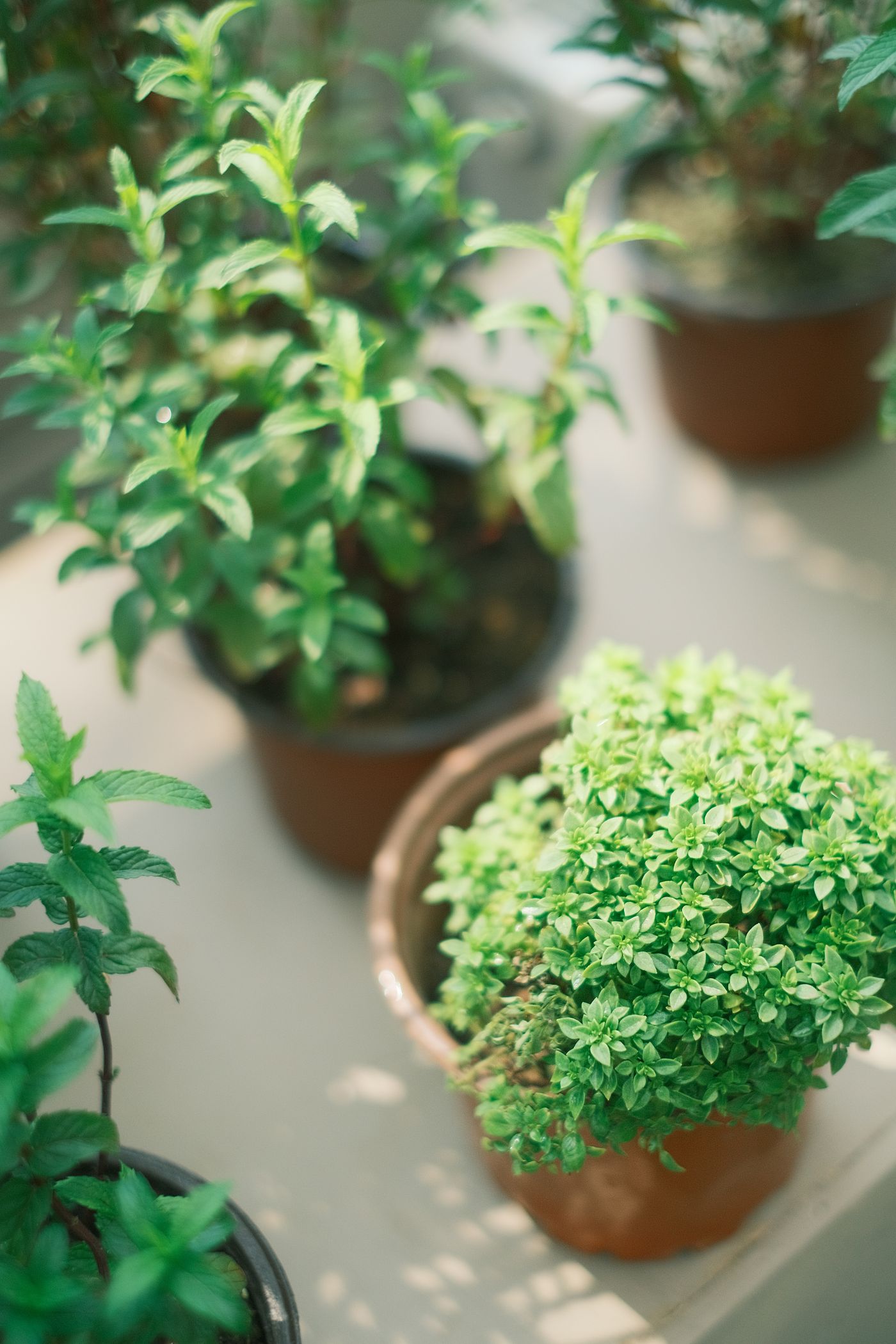
Choose one herb you use most weeks, one you might use if it were easy to get, and a third only if it has a suitable place. If you frequently cook beans and roasted vegetables, you may get more use from thyme than from a large pot of mint. Mint is a good choice where it suits the space and you make drinks, salads, or sauces that call for it. Its spreading growth is a reason to give it a pot of its own. A jar of dried oregano might already do everything you ask of that herb, while fresh parsley is absent because a bunch from the shop tends to go limp before you finish it. The choice depends on your own kitchen.
Buy culinary varieties with reliable labels. Some plants that are called by similar common names have different uses, and decorative plants are not necessarily sold or treated for food production. If you are unsure of a plant's identity or whether it was grown as an edible, leave it out of dinner. Use growing containers and materials appropriate for edible plants. Avoid repurposing a pot that held an unknown substance. Make small labels for the new pots, and keep the labels if you buy several varieties that are difficult to tell apart at first. Include the date for a pot of seedlings; knowing how old they are will help you plan the next sowing.
Let the available light decide between the candidates
Check the balcony at intervals on a clear day when you will actually be growing the herbs. Watch the height where the leaves will sit. An opaque railing can shade a short pot while the top of a taller pot gets direct light. A roof and walls can shorten the sunny stretch even when the balcony faces a promising direction. Wind is equally noticeable in a small exposed space: stems can dry and be battered where moving air rounds an outside corner. An herb at the sunny edge may fare worse than one a little further back if it spends every afternoon drying out and leaning sideways.
The University of Minnesota's culinary herb guide gives a useful overview of light and growing conditions. Many common herbs grow best with several hours of direct light. Where the only direct light is gentle morning sun, try a smaller trial of parsley or chives if your conditions suit them, and judge the growth before expanding. Sun loving thyme or rosemary is a poor investment on a very dim balcony. Basil likes warmth and good light, but a small pot on searing paving can still be hard to keep evenly watered. Cilantro often goes to flower quickly in hot conditions; it may do better as a cool season crop where you live. Don't treat an unsuccessful summer pot as proof the herb cannot grow there in a different month.
Use separate pots when the watering needs differ
A long mixed trough saves space only if the plants can use the same conditions. A rosemary that wants free drainage and a mint that needs more regular moisture do not become compatible because the box looks orderly. Give each plant a separate pot to begin with. Set the pots close enough to carry a watering can around them in one trip, but with room for air and some space to look beneath the leaves. If they share a decorative outer container, make sure none of the pots is sitting in trapped water. A saucer can protect the balcony floor; empty excess water rather than turning it into a reservoir by accident.
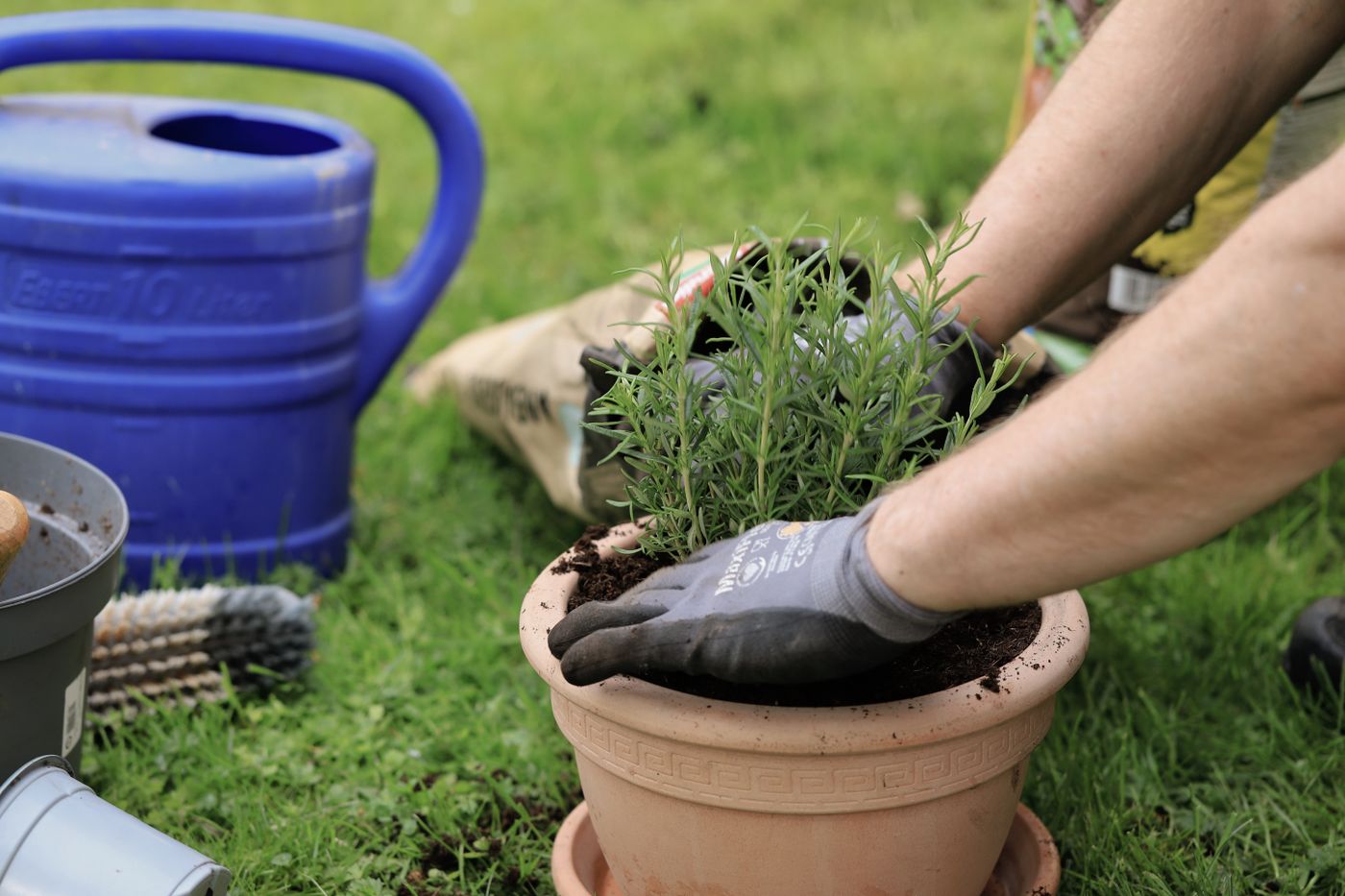
Choose a size that can support the expected root growth without requiring you to water constantly. A shallow pot will be limiting for an herb that needs more depth. Use a container mix suitable for edible plants and make sure the drainage outlets are clear. A very large pot full of wet mix is considerably heavier than it looks at the shop. Check building rules and load limits, keep doors and exits clear, and avoid unsecured planters on top of railings. Plan a way to catch or direct drainage so that it doesn't wet a neighbour's balcony or land on a public route. If the growing spot depends on putting a heavy planter somewhere questionable, choose smaller pots in an approved position instead.
Learn the weight of a pot after a thorough watering and after it has dried as far as is suitable for the plant. For a small pot, that difference makes a useful check alongside feeling the mix. Check an inch or so below the surface where roots allow rather than judging by colour alone. Adjust with the weather and plant growth. When a dry mix sheds water down the sides, water gently and pause between passes to let it take up moisture. Keep the can or a suitable bottle in reach. If it is inconvenient to water the last pot in the row without touching wet leaves or shifting furniture, change the arrangement while the plants are still small.
Harvest to keep the plant growing
Keep a clean pair of snips where you can find them. When a plant is young, wait for it to establish before asking it to supply much of dinner. For branching herbs such as basil, snipping a tip just above a healthy pair of leaves can encourage side shoots. Pick a little from more than one stem instead of stripping one plant bare. For chives, take a few leaves close to their base as needed and let the rest keep growing. With parsley, choose healthy outer stems while leaving the centre to produce new growth. Each herb has its own way of replacing what you take. If the supply goes down over several harvests, the plant may need more time, more appropriate light, or a second pot to meet demand.
Rinse harvested herbs with clean running water before using them, and pick away damaged leaves. Don't harvest leaves exposed to unsuitable sprays or other contamination. If a pest problem comes up, identify it before treating the pot. A product should be specifically appropriate for the edible crop and used as directed, including any interval required before harvesting. It can be simpler to remove a badly affected small plant and begin again. Inspect the plants around it and make sure the new pot has adequate air, space, and water. Growing just a few herbs makes it easier to see a problem before it affects an entire collection.
Pay attention to flowering as a signal that the plant is moving into a new stage. A basil plant grown for leaves can often be kept producing leaves by removing early flower tips and continuing light harvesting, although it won't behave as a young plant indefinitely. Cilantro beginning to stretch and flower has a different growth pattern. If you mostly use its leaves, sow another small pot rather than trying to turn the old one back into a seedling. You can keep some flowering growth where you have the space and it suits your goals. Consider when you'll need the next leaves before giving all the pots over to flowers at once.
Leave room for one pot to be in transition
Three containers needn't hold three different herbs all year. Use a spare pot to start the next crop of a favourite while the old plant is still producing. If you're learning from seed, sow a modest amount according to the packet and keep a note of the date. Start a later batch a short interval afterward instead of depending on one big sowing. Where seasons limit growth, ask a nearby grower about suitable planting times. You can buy one established plant for immediate use and learn to start the next one from seed without putting the whole season's supply at risk.
By the end of the first month, judge the pots by what makes it to the chopping board. You may discover that a small amount of parsley has been picked almost daily, while the mint is beginning to fill its container without being used. Move the mint to a more appropriate spot if there is one, or give its place to something you will cook with. Don't interpret a pot that needs more light as a personal failure or try to make up for the site with fertilizer. A balcony herb garden can shrink or change with the seasons. Keep the plants that earn the trip outside when the pasta is already boiling, and let an empty pot be a useful place to start the next thing.