A Living Room You Can Talk In
Trace the sources of distracting sound and try small changes that make conversation easier across a furnished room.
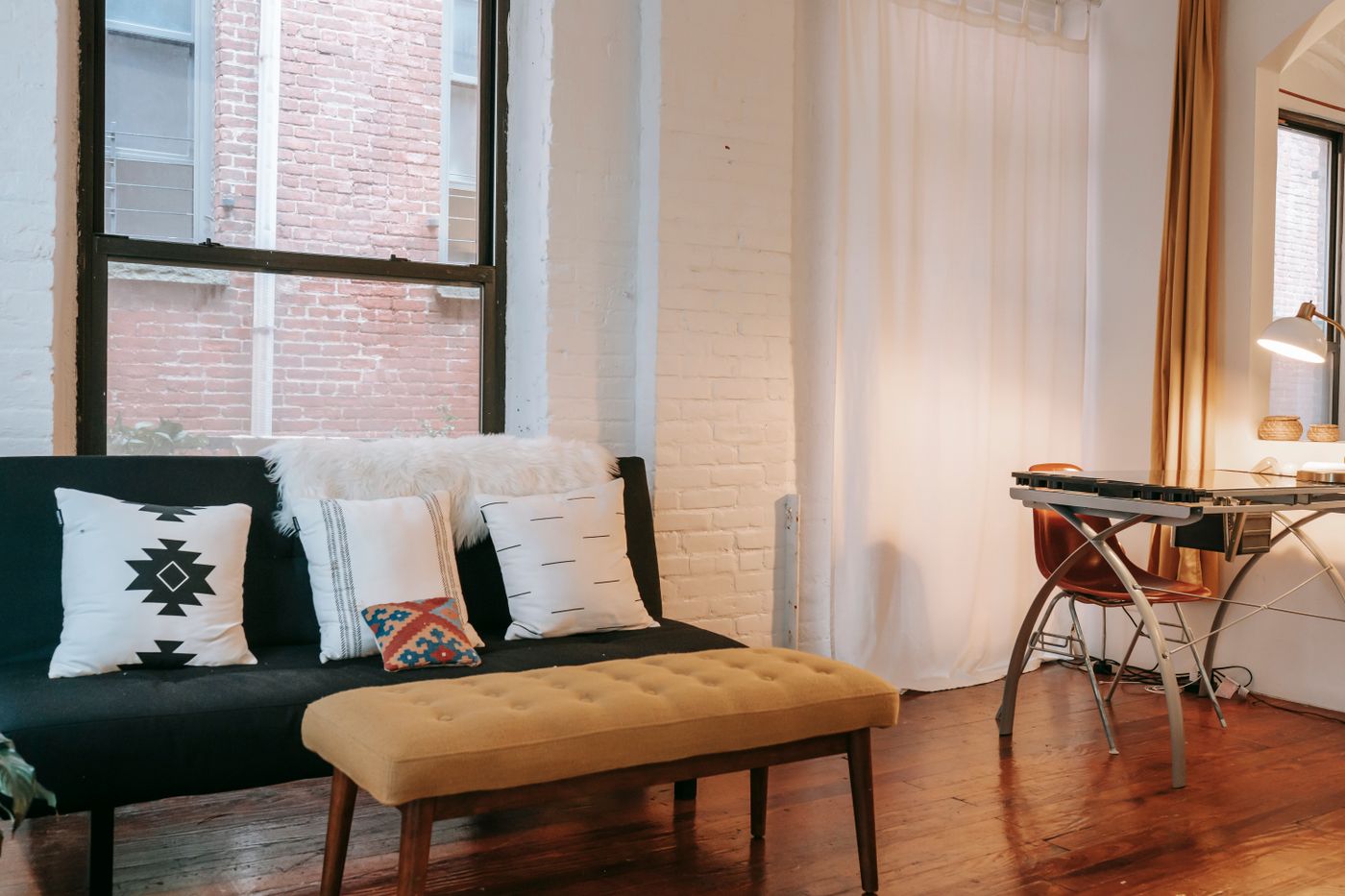
A newly painted room can sound as empty as it looks. Slide a chair across the bare boards and the scrape carries into the hall. A laugh on one side of the room seems to hang overhead. Once a sofa, curtains, and some books arrive, the same voices often feel closer. The change is particularly easy to hear when three people talk at once. They can interrupt each other without doing the small extra work of separating an echo from a sentence.
Sometimes a room is uncomfortable for a different reason. The refrigerator hums beyond an opening. A bus passes the front window. A speaker faces the wall behind someone's chair. Adding cushions to the room might improve how voices sound indoors while doing little about those individual sounds. A short listening session can tell you where to spend your effort.
Listen at the hour that bothers you
Turn off things you can easily stop, such as music or a portable fan. Leave the room in its usual configuration with the doors and windows as they normally sit at that hour. Ask someone to talk from the places people usually occupy. Listen first from your regular seat and then from the one that seems hardest to use. Sit a little closer and a little farther away. If people need to raise their voices only from particular locations, the distance between seats or the way one chair faces can contribute to the problem.
Listen for what happens in the pauses. A sound that hangs briefly after a door clicks or someone stops speaking points toward reflections within the room. A motor or voice that continues at the same level through the pause suggests a source elsewhere or a piece of equipment running indoors. Pay attention to the time of day. The room may be comfortable on a Saturday morning and difficult during the evening rush, when road noise and indoor conversation coincide.
One way to record the result is with a note written in ordinary language. “At the window seat, I can hear every word when the door is shut. The person on the sofa sounds distant once the door opens.” That is easier to act on than “the room is loud.” A phone recording can help you remember a conspicuous rattle or note where a noise begins. Automatic level changes and the position of the microphone limit what it tells you about the sound a person hears across the room. The people using the seats provide the most direct comparison.
Give speech a shorter trip
Move an occasional chair closer to the sofa and point it toward the seat people tend to choose. Hold a normal conversation there before moving another object. A large room can have one compact place to talk and open floor elsewhere. Placing every seat against the outer walls maximizes the distance between people, and the room's size becomes part of every conversation. If somebody wants to watch a screen too, a chair that can turn to face either the screen or a friend can keep the arrangement flexible.
A little change in angle can matter more than a major change in distance. People speak toward the person or object they face. If two chairs look out the same window and both people stay facing forward, one may miss soft parts of the other's speech. Two chairs turned slightly inward can preserve the shared view and make it easier to hear. Arrange a test with regular cushions in place because a deep seat can hold a person's shoulders much farther back than the line of the chair's legs suggests.
Examine the seating without music, and then while it plays at a level you would actually use. If a small speaker sits right beside one chair, the person there may have to compete with it even if the room sounds quiet elsewhere. Moving it away from that seat may balance the room. A change to the equipment's level or position is a low effort first step. Give the people closest to the sound a chance to comment before selecting a setting from the opposite end of the room.
Add softness where a large surface stays bare
Reflections are often easy to notice in a room with hard floors, uncovered glass, and long bare walls. An extra cushion or two can feel pleasant, but each takes up a small fraction of the surface area around the listener. A rug, an upholstered seat, or substantial curtains affect larger areas. Look for a surface that can accept soft material and where the material has a second everyday purpose. A curtain that controls a view or a rug that warms the floor can earn its place regardless of how dramatic the sound change turns out to be.
Borrow a rug or drape a thick blanket safely over the back of an existing sofa during a short trial. Listen again from the same seats. You are trying to find out whether changes to soft furnishings are perceptible in your room. If you can draw existing curtains, compare them fully open and fully closed. Make the comparison while the window is shut, so street noise is roughly the same in both conditions. Ask another person what they hear before telling them which arrangement you preferred.
A sofa with thick upholstery introduces softness around seated people. A similar sized sofa with large exposed timber sides leaves more hard surface in the room. An open bookcase creates an irregular surface and is useful for books, but it is hard to predict how much it will change the sound without trying it. If you already have one, listen with the furniture where you use it before buying anything specifically for sound. Secure large furniture as directed by the manufacturer and leave clear access to exits and heating equipment.
Follow noise that keeps going when everyone stops talking
A rattle tied to the rhythm of music is often close to something vibrating. Start at a low volume and move the loose objects around a speaker individually. A glass touching the wall of a cabinet or a lamp base rattling against an uneven shelf may be surprisingly loud. If the furniture itself vibrates, place the equipment on a stable surface or use an appropriate support as directed by the maker. Check for room objects in the way of controls or vents while you are there.
Sound coming from an adjoining room is a different problem. With the door in its normal position, listen close to the opening and then several steps away. Close it briefly if the household permits, and compare from the same seat. A large improvement suggests a practical routine, such as closing a door during a shared film or moving the reading chair farther from the opening. Check that any proposed changes to doors or seals preserve their required function and ventilation. For noise that passes through a wall or structure, a qualified professional can help identify how it travels before you pay for construction.
A small household sound can seem louder when it is intermittent. The repeated click of a clock or a loose metal catch sounds fine until it happens every thirty seconds near someone's ear. If the source is portable, move it to another room temporarily and listen for a whole evening. If a fixture or appliance makes an unfamiliar sound, follow its instructions or seek qualified help. Work around a routine source once you know it is safe to leave operating, or solve the underlying problem if it needs repair.
Change one thing at a time while you investigate. If you close the hall door, stop the music, and move a chair in a single pass, you may end up keeping all three changes even though only one makes a difference. Return the door and the music to their usual settings before evaluating the new chair position. Put the simplest effective change back into daily use, then see whether there is another problem worth solving.
Check results with a familiar scene
Use a routine activity to compare before and after. One good test is a family conversation in which somebody in the far seat asks a question while another person finishes a task nearby. Another is watching a program with spoken dialogue at your usual level and looking for the seat where the speech is least clear. Leave the volume where it was for the comparison. If the same sentence sounds clearer after turning the chair, you have identified a change that works without making the equipment louder.
You may find that one adjustment helps voices and another makes the television easier to hear. That result gives you choices. A small room used for both can keep the regular seats angled toward one another and turn an extra chair for a film. A larger room can put its conversation area away from the opening into the kitchen. You can also make an adjustment for one particularly sensitive seat. If a guest would have an easier conversation farther from the fan, offer them the chair there.
The room does not have to become quiet in every circumstance. On a day when people cook and entertain at the same time, some sounds travel and the house feels busy. The aim of a quieter seating area is to let the person beside you finish a thought at their normal volume. Try it at the hour the problem used to be most noticeable. If the conversation has become easier to follow, the arrangement is doing its job.