
A Wardrobe Rail for Clothes in Regular Use
Put together an accessible rail around the clothes you reach for now, with room for a hanger to move and a place for clothes between wears.
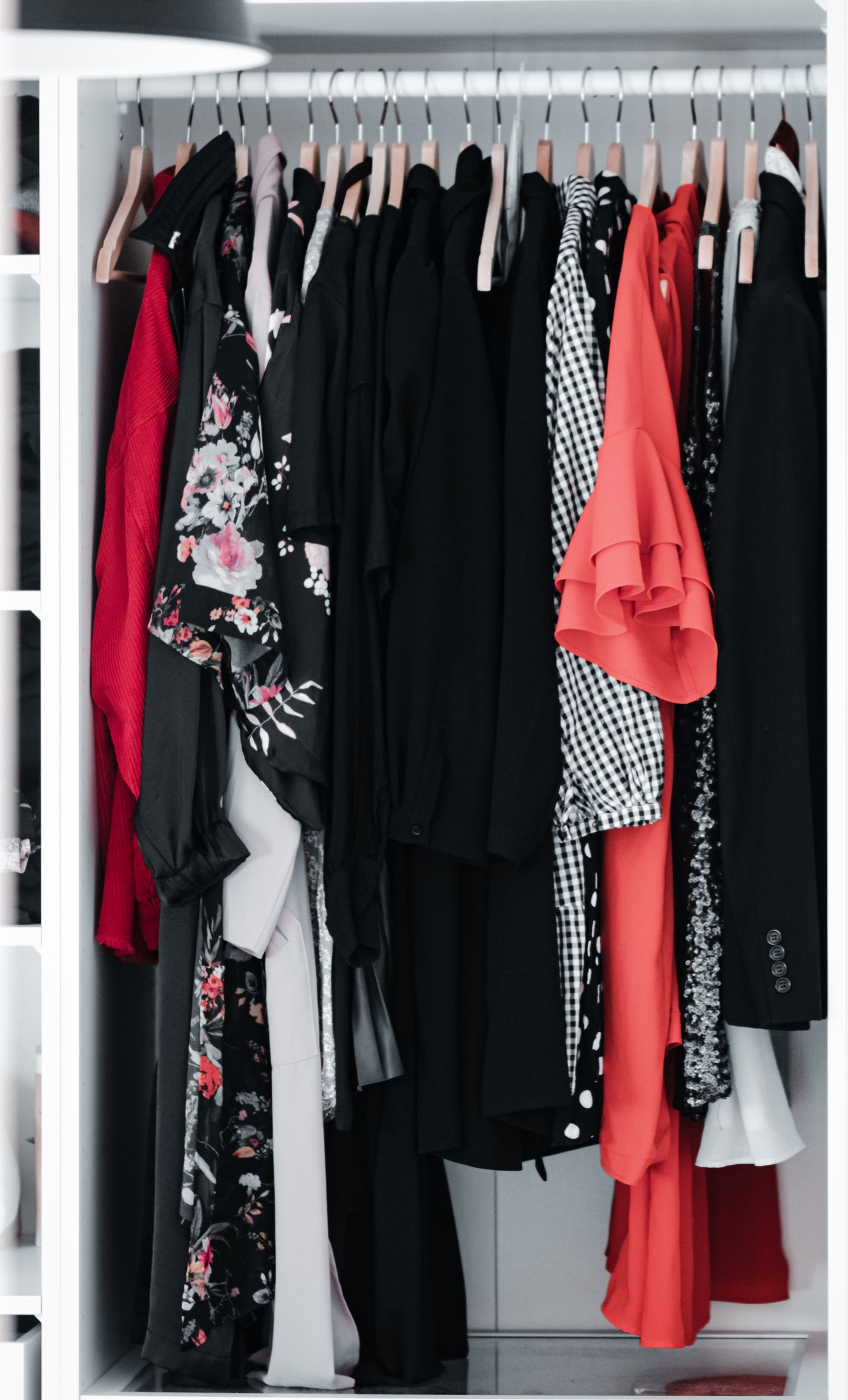
Some wardrobes are busiest at the left end. A few shirts and jackets come off their hangers and go back every week, while the rest stay compressed together out of the way. It can be tempting to move everything around by colour. A better first step is to find out why that small end has become the one people use. Perhaps it is the closest to the door. Perhaps a sleeve there can be pulled out without taking the two garments beside it. The arrangement should make it easy to see choices at the hour you get dressed and easy to restore those choices at the end of the day. A rail that works on Monday morning is a more useful measure than the number of hangers that fit on it.
Find out what is doing the work already
For a week, set the clean clothes you actually wear back on the same side of the rail. Leave the rest where they are for now. You will learn where the regular rotation is smaller than you imagined and where it is larger. A series of nearly identical dark trousers may all be in use because they go with work clothes. A favourite jacket may get more use than all the others combined. This observation is a starting point for arranging the rail. Clothes worn on a special occasion can be worth keeping even if they never move in an ordinary week. Give them another position based on when they need to be found.
Consider the combinations that work without a trial in the mirror. If you wear certain shirts with several pairs of trousers, bring those groups into the same stretch. Keeping outfits permanently on a single hanger might hide options or put too much weight on it. A nearby rail position can give the same reminder while letting you use the pieces separately. Keep everyday options visible at a comfortable height. A wardrobe shared with someone else needs space defined by actual use and reach. An equal division of the rail can be inconvenient if one side has the deepest clearance and the other person needs it for longer garments.
Make a place off the active rail for items waiting on a decision. A coat with a loose button should have a plan and a repair date, especially if fixing it would put it back in use. A garment that you like but can't wear at present doesn't have to sit between two useful shirts indefinitely. Place it in suitable storage where it can be considered later. If something is leaving, decide how it will leave and move it out of the dressing area when ready. A rail full of unfinished decisions asks you to make them again every morning. Choose a few decisions at a time and keep the clothes in regular use easy to get to while the rest are being sorted.
Measure for shoulders, sleeves and doors
Take a hanger with a bulky garment and move it to each end of the rail. Check whether a sleeve catches the side or a door brush touches the shoulder. With sliding doors, look at the part of the rail you can expose at one time. A position that is theoretically available can be difficult to reach if it always falls behind a door panel. In a shallow wardrobe, hangers may need to sit in a particular direction to fit without brushing the doors. Test the arrangement with the widest shoulders in the house before deciding which hangers to buy. Use the manufacturer's guidance for rails and fixings, and make sure any change suits the wardrobe's material and load.
Look at the length of hanging clothes as well. A rail can have one section where longer garments hang freely and another where shorter pieces leave a useful area underneath. Measure with the clothes in place. Long sleeves may droop lower than the hems, and a drawer that opens under short jackets can catch them at the front. The floor under longer garments is usually better kept clear where the clothes could touch dust or be pushed upward. If you add storage below short items, keep it shallow enough to reach and low enough for clothes to hang naturally. A clear gap between surfaces makes it easier to see and clean the floor.
Decide which hangers suit the clothes. Wide sturdy hangers can support shaped coats. Slimmer hangers can work for light garments if they hold them securely without leaving unwanted creases or shoulder marks. Delicate knits that may stretch on hangers are often better folded, following their care instructions. Choose specific hangers for tricky items before replacing every hanger on the rail. If a garment constantly slips off one model, find out whether the shoulders, the surface, or a fastening needs attention. Keep an unobstructed section where you can lift a hanger up far enough to remove it without forcing it around a shelf.
Leave room for the movement that finds a garment
Hang the clothes you reach for most and slide two or three hangers sideways. The ease of that movement gives you a realistic limit on how much can fit. A crowded rail may still allow one shirt to come out while everything else moves with it. That extra friction is felt every day. Put back an armful of fresh laundry and check the same movement again. Clothes that fit comfortably just before washing day may fill the rail too tightly once the laundry is dry. Leave some spare space at the point where a hanger moves, not only a gap at the far end that no one can reach.
Choose an order that helps you find the next option. A rail arranged by activity might have work clothes nearest the opening, with outdoor jackets at another reachable point. A rail arranged by shape might hold short shirts together and put long garments where they have clear drop. Within one group, colour can help tell similar pieces apart. Avoid applying a single sorting principle to every part if the wardrobe shape gives you better options. A dress and a short shirt of the same colour need different vertical space. Give each the right position first, then use colour or another cue inside the group where it helps.
Take a photo of the rail if someone else puts things away and the order is hard to describe. An image of a lightly stocked arrangement can show where the long garments go and which hangers are usually in use. You can also use a distinct hanger for a small category that is otherwise easy to confuse, such as a shirt set aside for work the next day. Don't introduce a label or colour code that takes longer to understand than finding the garment would have taken. A small gap between two groups can be more readable than a label hidden beneath the hangers.
Give clothes between wears a defined place
A jacket or pair of jeans may be clean enough to wear again but not ready to go back among freshly washed clothes. A hook or separate part of the wardrobe can keep such items available without hiding them in a growing pile. Choose a spot with appropriate air and clear access. Allow damp or sweaty garments to dry properly before enclosed storage. Use a hook suitable for the item and the surface it mounts to, or put the clothes on an available hanger in a dedicated area. Limit the number of places so you can see what is there. If the same two garments remain untouched for a week, decide whether to wash them, wear them or return them to storage after suitable care.
Allow a return path for clothing from the laundry. If a basket has to be moved out of the way before the wardrobe can open, finding a better basket position may improve the rail more than another row of hangers. A small temporary hook can hold tomorrow's outfit while everything else goes straight back to its place. Put unused hangers at one reachable end so that they don't disappear among full ones. If the hangers keep piling up, keep the number the active rail needs and store useful extras with the laundry or donate them where accepted. Empty hangers should be easy to find and should take up little of the rail's working area.
Move the boundaries as the season changes
When the weather changes, recheck which clothes earn the front position. You may only need to move one group rather than empty the wardrobe. Keep something suitable for an unusually hot or cool day within reach if the local weather makes that likely. Store less used clothes clean and dry in conditions suited to their materials. Check periodically for damp or pests in the storage area, and follow appropriate advice if you find a problem. Preserve garment labels and any details needed for care. Clothes stored somewhere unsuitable may take up less rail space and still cost more time when you want to wear them again.
As a final test, put away clean laundry and get dressed for an ordinary day. See whether you can lift the clothes you want without pulling the sleeves of their neighbours with them. Notice whether the hangers you need are easy to grab in the evening. Shift a single group if you keep reaching past it. The best arrangement will follow changes in work, weather and taste without requiring a full clear out. A little room around a favourite shirt is a useful luxury when there are only a few minutes to get dressed and the wardrobe door is already halfway closed.