How an Armchair Fits the Way You Sit
Compare seat depth, arm height, fabric, and the space around the chair before bringing home a piece you will use every day.
The first thirty seconds in a chair tell you about the upholstery. The next ten minutes tell you where you put your feet. The moment you stand up tells you more than either. A chair can feel luxurious at first and gradually ask you to perch on the edge to reach a table. A plain chair with firm support can become the one everyone uses when they want to settle in with a book and a cup. To tell them apart, spend a little time with the position of your own body and the things you do from the seat.
Start with one person and one ordinary activity. A chair used for long phone calls can be different from one used for putting on shoes by a window. Two people who share a chair may want different features from it. If possible, try the chair in a shop in the clothing and footwear you often wear at home. See what happens as you lean back and after your legs have relaxed. When you shop online, measure a seat you already know and record what you like about it. Check the return arrangements and the actual dimensions of the product before comparing its photograph with your room.
Start with the relation between your feet and the floor
Sit as far back as you would when reading. Check where your feet naturally land. With a deep seat, a shorter person may slide forward to put their feet down, which leaves a gap behind the back. A shallower seat can give a tall person less support under the thighs. A firm cushion and a soft one with identical advertised heights can sit very differently once you put weight on them. Treat the listed measurement as an unoccupied dimension unless the seller describes it otherwise.
Test whether you can change position without losing the support you like. Put both feet down, cross an ankle if you normally do that, or lean forward to reach something on an imaginary side table. If your feet hang when your back touches the cushion, try a small footrest if you would use one at home. A loose cushion can also bring the back support forward. Test that arrangement for several minutes. The cushion should stay where you put it and should have a home when a taller person uses the chair.
See how you get up. Move your feet to the place where you would normally stand, then rise without hurrying. Take note of how hard you have to push on the arms. A low deep chair may suit somebody who likes to recline and feel awkward for somebody who needs a firm stable support to rise. If the chair is intended for a person with a specific mobility requirement, ask them to try it and seek professional fitting advice where appropriate. A well matched chair gives the person room to use the movement that already works for them.
Follow the movement of your arms
Check the height of the arms while sitting all the way back. A support that leaves your shoulder lifted can feel fine for a minute and tiring when you hold a book. An arm that is too far away to reach might be fine for watching a film and troublesome if you rest your elbow while sewing. Arms with a broad surface give you room to change position. Slimmer arms leave more of the overall chair width available for the seat. Feel where the front of the arm ends and what happens when you move a cup between the chair and a table beside it.
A rounded arm can be soft on a forearm and awkward for balancing any object. Think through where drinks, glasses, and a remote go. An open sided chair can give you a little more range to reach a low table. A broad closed arm may put the same table out of range even when it looks close from above. In a small corner, a narrow table with a stable base may solve that problem, but check the total width of the proposed arrangement before committing to the chair.
The support behind your shoulders also depends on the activity. A tall back may feel welcome when you lean back to listen, especially if the shape agrees with the way you hold your head. A back that pushes the head forward can be uncomfortable in an otherwise deep seat. If you work on a project in your lap, see whether the chair supports an upright position as well as a reclined one. You can have a comfortable chair for one task that is a poor fit for another. Pick the task that will account for most of its hours.
Examine the fabric where hands touch it
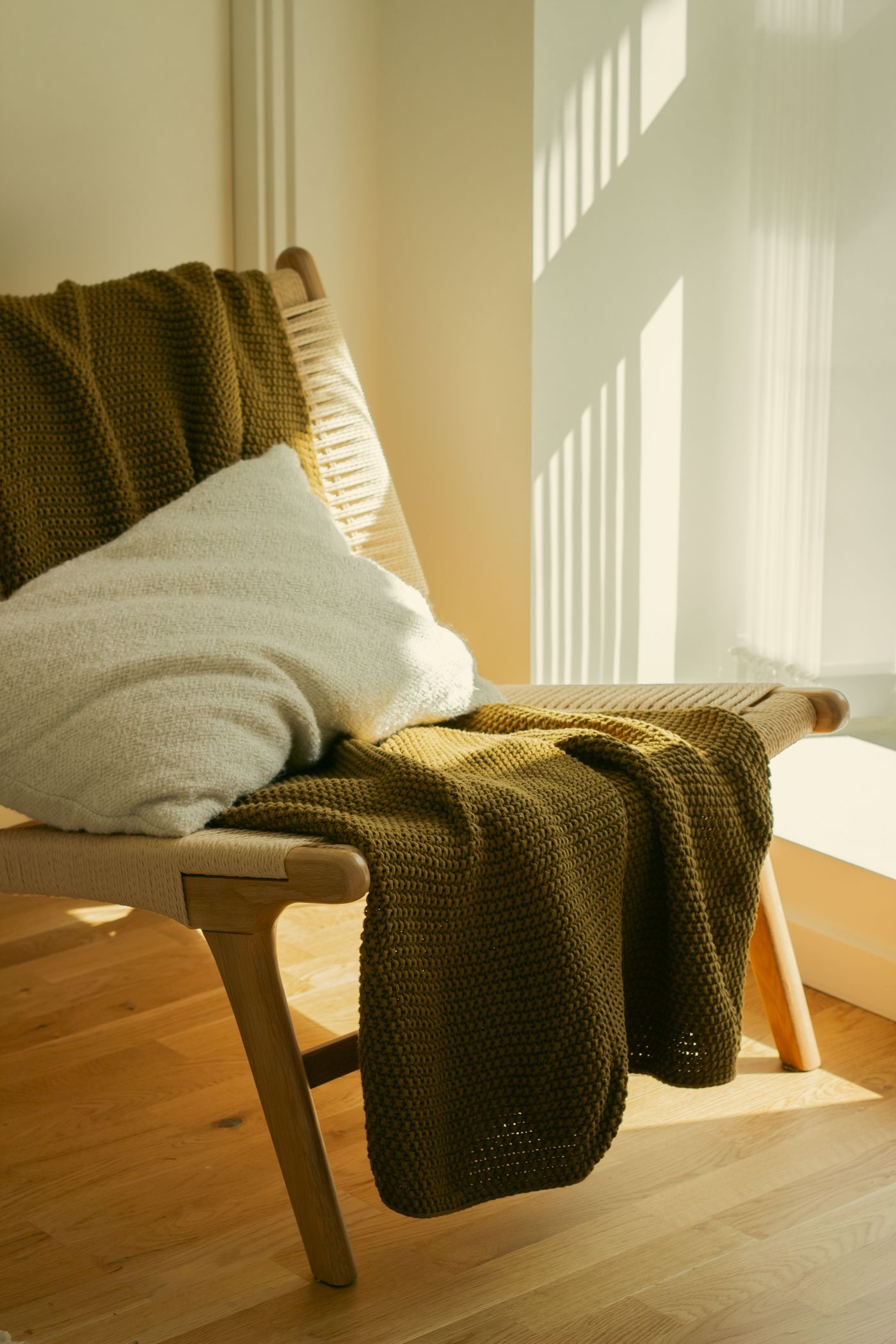
Ask for a sample if you can get one. Fold it around a corner of a cushion or another rounded object so you can see how the surface changes in light. Some cloth looks uniform when flat and develops a sheen at its bends. Rub the sample with your fingers in more than one direction. A pronounced texture can feel pleasant and still catch a loose thread. Think about whether bare legs or arms will often rest there. A durable looking cloth can feel rough to a person wearing shorts on a hot day.
Read the care instructions for the exact upholstery and cover. A cushion with a zip may have a removable cover intended for professional cleaning rather than home washing. Ask which parts can be removed or replaced. On a chair with a reversible cushion, check whether both faces have the same fabric and how the cushion stays in place. If pets spend time in the room, look closely at seams and loops. Try removing some household lint from the sample without rubbing it hard. The way you can actually maintain the cloth is more informative than a stain demonstration that uses a different upholstery finish.
Consider the places that wear first. The end of an arm, the front edge of a seat, and the portion of the back a hand grabs to turn the chair all see more use than the sides. A light fabric may show marks early where someone's hand rests, while a dark fabric can make pale dust obvious. Neither effect requires replacing the entire chair if the piece is repairable or has a cover available. Learn whether you can replace a worn seat cushion and how the upholstery is attached if you expect to keep it for a long time.
Walk around the whole chair before it arrives
Put its widest points on a plan. Feet can splay beyond a compact looking seat, and a thick back may take up more depth than the photograph suggests. Mark the proposed outline at home and look at it from the entrance. Use something light to represent the top of the back so you can see whether it interrupts a view between two seats or in front of a window. Preserve access to nearby handles, blinds, and heating controls. Check the way the chair affects the path while somebody is sitting with their feet out.
If the chair moves, try the full range of movement in the proposed position. A swivel can touch a cabinet with its back. A recliner may need room behind the seat and ahead of the footrest. Follow the manufacturer's guidance on clearances, especially around moving parts. If there is an electric control, check whether a suitable outlet is close enough for the cord to follow a protected route. Make a place for a freestanding footrest when nobody uses it. An ottoman stored in the passage can compromise an otherwise good arrangement.
Finally, measure the way the chair will get into the room. Compare the packaged and unboxed dimensions with your doorways, stairs, landings, and lifts. Ask whether legs or cushions are removed for delivery and whether the delivery team carries the chair beyond the threshold. The dimensions of a door alone do not describe a tight turn on the other side of it. Take a few photographs with measurements if you need help from the seller. A chair that fits perfectly in a corner still needs to travel there.
Give the decision one ordinary evening
If you can try the chair at home, sit in it while the rest of the room is arranged for a real evening. Use the lamp, the table, and the usual path to the door. Try to finish one chapter without moving the chair. If you keep sliding a cushion forward, work out whether that is a stable adjustment. If the table ends up out of reach, see whether it fits in the right place while the route beside it stays open.
Take note when the chair feels easy to leave and easy to return to. In a room where people read, talk, and put the kettle on, they may sit down and stand up many times. A seat that supports that rhythm can be more inviting than one that looks impressive in the middle of a large showroom. The useful chair is the one that makes sense at the end of the day, with its fabric in the light you have and enough room to put both feet where you want them.