One Paper Tray and a Place for What Comes Next
Give incoming paper one clear destination and sort it by the next thing you need to do with it.
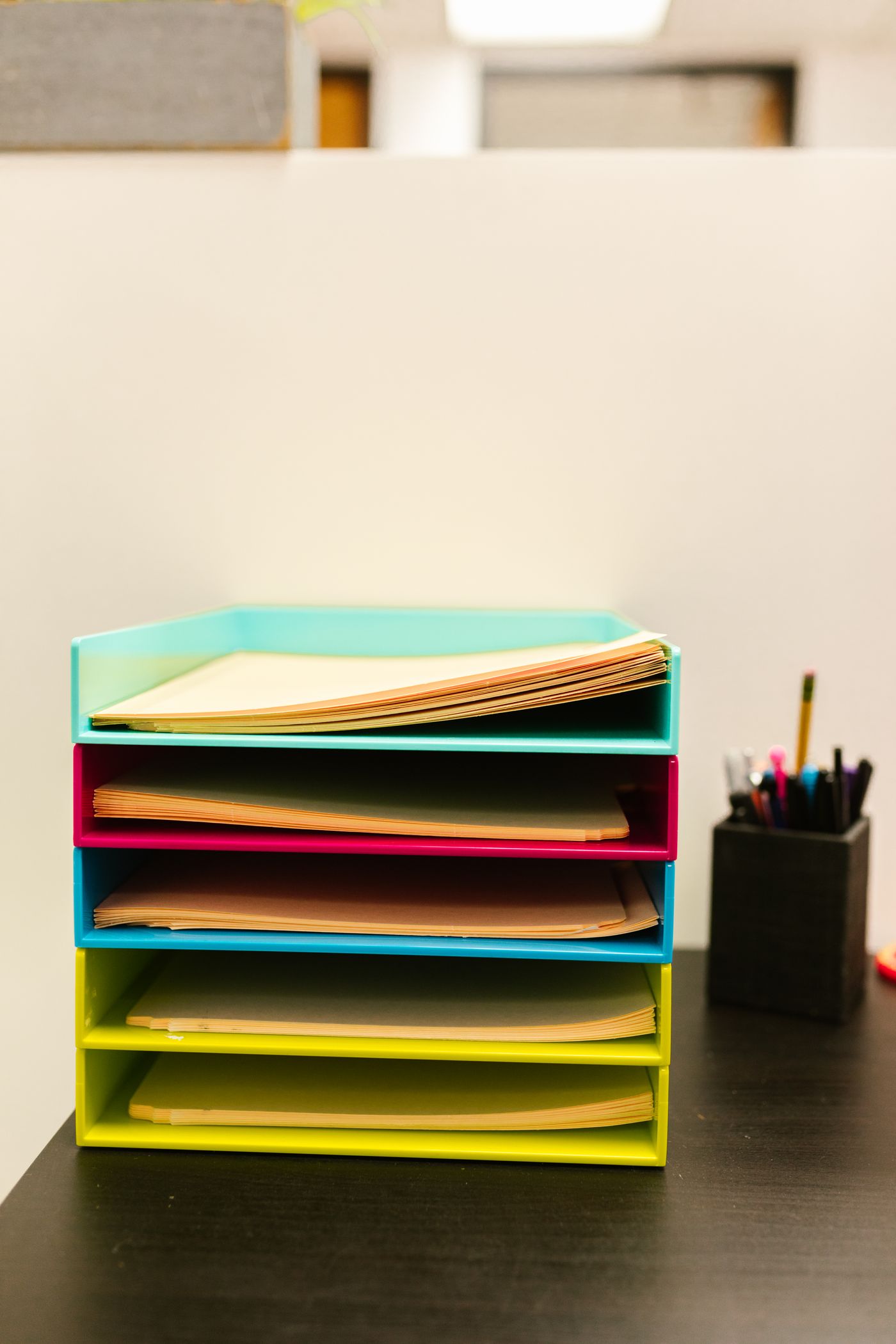
A piece of paper can move through several rooms without becoming any easier to deal with. A bill starts on the mat, waits on the kitchen table and goes to the desk when someone sets out the plates. Later it returns to the kitchen with two papers that happened to be nearby. The pile is moving because no one has decided what should happen next. An incoming tray gives those papers a place to stop. It is most useful when the documents that leave the tray have clear destinations, including the ones you cannot deal with immediately. You need a small way to remember an action, a place for documents worth keeping, and a reliable way to remove what is finished.
Set the tray where the paper first stops
Look for the place a hand naturally puts down mail or forms. It might be the kitchen counter, a desk just inside the front room or a shelf near where school bags are unpacked. Choose a dry spot where paper is easy to see and unlikely to be splashed or lost behind furniture. A tray does not have to sit exactly where the existing pile sits if that surface is needed for cooking or other work. It should be nearby and reachable enough that putting paper there is easy when your other hand is occupied. If you have a separate place for personal mail, tell the other people who use the space where it is.
Give the tray a practical size. It should hold ordinary envelopes and the largest frequently handled document without bending it. A low front lets you pick up the bottom sheet. Avoid a deep bin that can accept several months of paper and still seem nearly empty. If loose envelopes have nowhere to go except behind the tray, turn it or put it on a slightly deeper surface. A side wall can keep paper from drifting off without making the whole thing difficult to empty. Think about privacy, especially in a shared or visible room. A tray for everyday reminders can be open, while sensitive documents should go promptly into suitable secure storage.
Choose what belongs in the tray and what should go directly somewhere else. A large catalogue someone wants to read may fit better near a chair. A school drawing may deserve a place to be displayed or a short review with other artwork. A receipt for a purchase that may be returned belongs with the paperwork for the return while that option is open. If you give everything the same first destination, the tray becomes an obstacle to the people handling the mail as well as to the person who sorts it. Decide which kinds of paper can share the intake and which already have a good destination.
Make the first pass quick enough to repeat
Pick a short regular time to go through the tray. A quiet ten minutes once or twice a week might be enough when little paper comes in. Review urgent items sooner. Open one envelope at a time and work out what the document requires. Keep related pages together as long as they belong to the same action. Capture a due date in the calendar or task list you actually check, including enough information to identify the document. If a form needs to go somewhere, record where and how it must be sent. A date scribbled on the envelope does little good if the envelope is going back under the pile.
Separate the papers you can finish now from those that require a decision, a reply, or more information. A note that says "confirm Thursday appointment" tells you what to do. A note that says "clinic paper" makes you open it and find the action again. For a document you are waiting on, write the next point at which you will check what has happened. You could follow up in a week if a requested reply hasn't arrived. Put the related paper in a small active folder, with the note or task pointing back to it. Keep the active folder small enough to flip through without having to empty the whole tray.
Some paper can go away immediately. If a form is already recorded where you can reliably retrieve it and you have confirmed there is no reason to retain the original, put the paper in the appropriate disposal stream. Use secure disposal for documents containing sensitive information. Recycle clean ordinary paper where local collection rules allow it. Don't rush the decision with legal, tax, employment, medical or other important records. Check the relevant local retention guidance and requirements for original documents. When you don't yet know whether something should stay, give it a short review date and a safe place, then resolve that uncertainty before it becomes a permanent category.
Give the papers you keep a path back to you
Plan the archive for retrieval. A broad folder called Home may make sense when there are only a few pages about the property. If it already holds service reports, warranty details and instructions for every appliance, split out the information you tend to look up separately. Pick words you would remember without seeing the label. The word Repairs may be more useful to your household than a folder named Maintenance Correspondence. Use a date order within a category where it helps, and make the date you use consistent. For example, service reports can be filed by the date the visit occurred rather than the date the document was printed.
Keep the papers that need secure storage in conditions suitable to them. Don't leave original identity documents or sensitive records in a conspicuous tray on a desk. If a few household members need access, agree on an appropriate location and make sure each authorized person knows how to find the record. A digital copy can be convenient for reference, but some originals still matter and sensitive files need suitable access protection and backup. Before disposing of any original, make sure your reason for keeping a copy and the requirements that apply to it both support that decision. Having a phone photo somewhere is a weak substitute for knowing exactly where a document can be retrieved.
Use one searchable name for each digital document if you keep one. For many ordinary records, a date, the issuer and a short subject are enough to distinguish it from a newer version. Check scans for every page and readable details before filing. Decide whether attachments and follow up correspondence should live with the main file. Avoid building several archives with overlapping copies unless you have a clear backup or access reason. If you are not sure which copy is current, add a date or version in a way you can understand later. The same rule helps with paper copies, especially where a new page replaces a previous instruction.
Let shared papers make their owner clear
Where more than one person uses the desk, assign responsibility rather than expecting everyone to notice a date. If the paper is for someone else, put it in the agreed place and give them a straightforward message when needed. A colour or divider can help if everyone agrees what it means. Keep a separate place for papers only one person should see. For something that needs several signatures or actions, make it easy to tell who has already done their part. A reusable folder marked with the current next step is often enough for a single project. Two copies in separate piles can lead both people to think the other one is about to take care of it.
Check how paper gets handed to the household. Something from a school bag may arrive on a different schedule from the mail. An older relative may prefer a physical copy of a document even when another person can retrieve the digital one. A visitor may leave an instruction sheet by the appliance it concerns. A routine designed around one person receiving all papers at the same desk cannot account for all of these situations. Choose an intake place people can realistically reach. Keep a short written note for complicated tasks, and use the tools already familiar to the people who need to complete them.
Try finding three things a month later
Pick a document you expect to use soon, one from a completed job and one important record kept for reference. Locate each with the labels and reminders you set up. If an item takes a long search, look at the point where you lost its trail. A receipt might be in an appliance folder while the reminder calls it a return. A folder that held one project may now hold three that have little in common. Correct the name or move the document where you would next look. If there are several papers in the intake tray that have already been handled, make the exit from the tray clearer or spend five minutes closing the oldest action.
At the end of a normal week, the incoming tray may still hold a couple of unopened envelopes. A paper system can be working even when it isn't empty. The more revealing test is whether a new arrival has somewhere to land and you can tell which earlier items need you first. Keep a little room for the forms that turn up at an inconvenient hour. You will use that room more often than a matching set of archive boxes, and it will make the archive easier to trust when you finally need something from it.