Put a Cloth Napkin Back in the Drawer
Mend a split seam or a worn corner by deciding what the cloth still has enough strength to do.
A cloth napkin wears out in a strangely specific way. Three sides may be sound while the fourth looks as if somebody has worried it with a thumbnail. A corner gets caught in a drawer, or a hem comes open and starts collecting threads from the wash. These are small failures. Left alone, they can make a favorite napkin gradually smaller as more of the edge unravels. Repaired while there is still good fabric nearby, they can leave you with a cloth that folds and washes much as it did before.
The decision is whether to preserve the full size, fold a new edge or give the cloth a different job. A neat patch can be satisfying if the cloth on either side can support it. An elaborate patch sewn through thin material will fail beside the repair. Spend a few minutes looking at the napkin before you try to make a stitch.
Find the sound cloth
Wash and dry the napkin according to its usual care instructions so that you work on a clean, relaxed piece. Lay it flat on a surface with good light. Hold an undamaged part up to the light and compare the edge you want to mend. A stable weave has relatively even spaces between threads. A worn patch may look more open or fuzzy, or you may see broken threads for a little distance beyond the obvious tear. That distance matters more than the width of the tear itself.
Look at the original hem from the back. Many napkins have a narrow double fold with the cut edge tucked inside. If the stitching broke but the folded fabric is still strong, the old crease is your guide. If the weave has worn through along the crease, stitching the same line will put the new thread straight into weak material. You can fold a wider hem past the damage or add a patch from sound cloth. It is worth comparing both options on the table without making any cuts.
Decide whether the napkin needs to match others in a set. Taking a thin strip off one side of a generously sized square will have little effect when it is folded beside a plate. On a smaller napkin, shortening one edge may make it awkward to fold into quarters. You can use a contrasting patch as a small, deliberate detail and keep the original dimensions. Put the cloth beside its neighbors to see which difference bothers you more before you reach for scissors.
Match the repair to the wash
Use thread suited to the weight of the material and compatible with the way you launder it. An exceptionally heavy thread can concentrate stress in an old, light cloth. Fine thread used for ordinary hand sewing is usually easier to control on a lightweight woven napkin than thick decorative cord. Test a few stitches on a spare piece or inconspicuous fold. If the weave puckers even with a relaxed stitch, a smaller needle or finer thread may suit it better.
If you are patching, choose a washable woven scrap that behaves similarly to the original. A much thicker material can dry more slowly and make a corner uncomfortable to use. If the scrap is new, wash it as you would the napkin before cutting it to size, since shrinkage can pull a flat mend into a little bowl. Where the scrap is dark and the napkin pale, check whether the fabric releases color in the wash. A patch in the exact color is optional; compatible weight and care are the useful similarities.
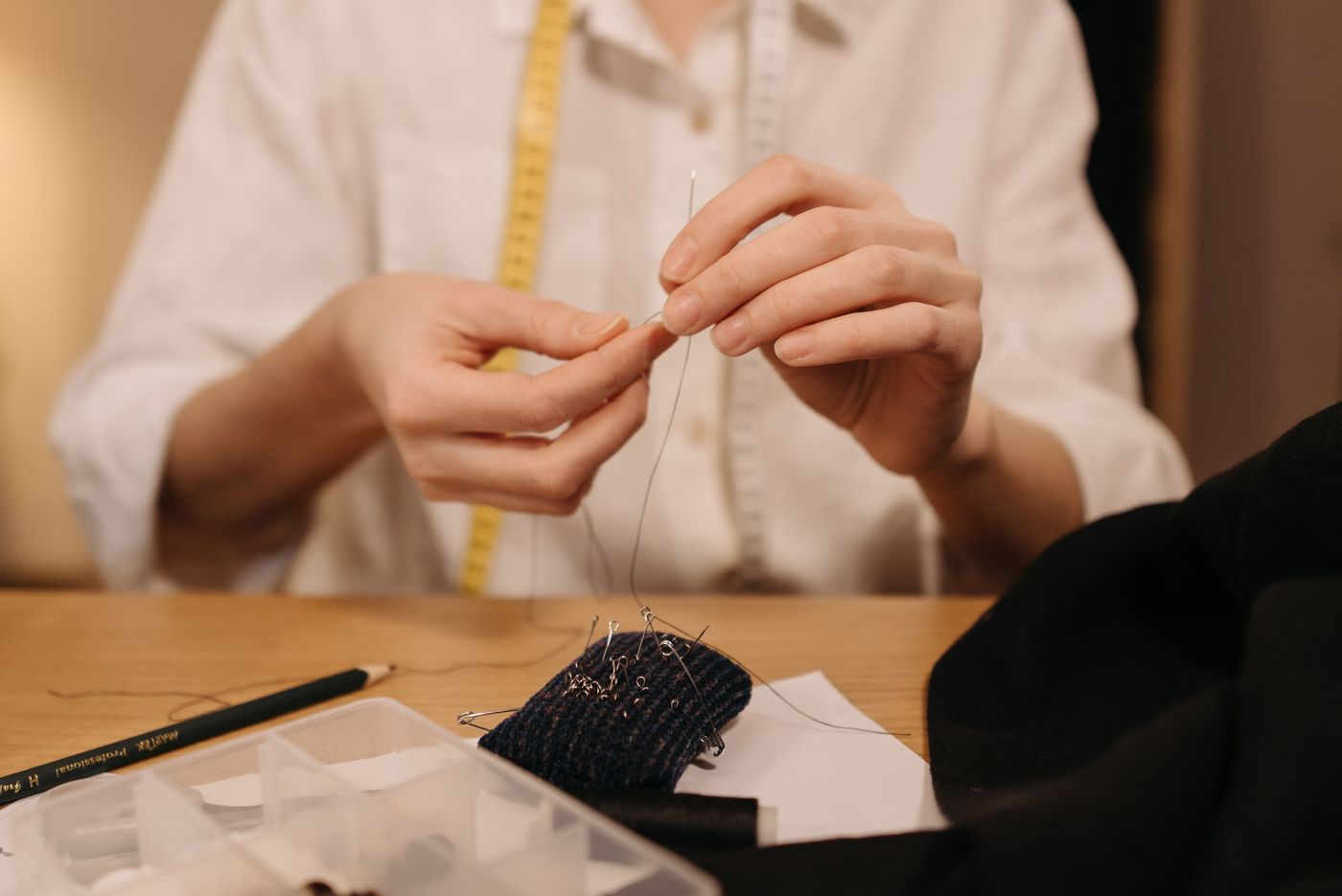
Gather a needle, scissors, good light, thread and pins or sewing clips if needed. Work on a surface where you can see what falls. Keep needles and pins away from children and pets, and count them back into their container when you finish. A short length of thread is less likely to tangle or snag on the rough edge than an armful of it. Begin with more than you think you need for the small section you are closing, but short enough that drawing it through is comfortable.
Close a hem that has only come unstitched
Place the napkin wrong side up and lay the fold back into its old crease. Leave any sound stitching in place. A couple of clips can hold the fold while you see whether the two sides line up. Look at the right side before sewing. If the hem has twisted, a row of stitches will preserve the twist. Flatten the cloth with your fingers or press it if the care instructions allow. Let it cool or relax on the work surface before pinning again.
Begin a little before the opening where the old seam is still secure. Use a small stitch to anchor the thread in the fold. For a nearly invisible repair, pick up a thread or two of the napkin body, then pass the needle into the folded hem and bring it out a short distance farther along. Continue in that order. A small running stitch through the folded layers is also fine if the original stitching is visible. Consistency matters more here than hiding every stitch; the seam needs to stay closed when it is washed.
Pause after a few stitches and spread the napkin out. If the edge curls inward, the sewing thread is pulling too hard or the folds are misaligned. Undo those few stitches while it is still easy. A good stitch brings layers together without shortening them. Continue a little beyond the damaged stretch, anchor the thread in sound cloth and tuck the end into the fold. Run a finger along both sides and feel for a hard knot or loose loop. Remove clips or pins and put them away.
Add cloth where the corner has worn through
A corner that is thin on both sides of the original fold needs support across the thin area. Decide whether to trim and fold a new corner or keep the size with a patch. Do not cut until you have folded the new edges in place and checked the resulting shape. If a small tuck removes all of the weak material while leaving enough cloth for two secure folds, there is no obligation to patch.
For a patch, cut a scrap large enough to reach sound material on every side of the wear and to turn under its own raw edges. Align the direction of the weave with the original cloth so the layers move together. Baste or clip the patch in position and turn the napkin over. Check that it still lies flat and that the patch does not interfere with the usual fold. Avoid tight pulling while you secure the patch with small hand stitches through strong cloth. If the repair covers a hole, check both sides for loose raw edges that can continue to fray. Bring those edges down with a few light stitches rather than trying to squeeze the hole shut.
If a corner has a bulky buildup after you fold it, compare it with a nearby corner before trimming any sound cloth. You can choose a flatter patch that ends short of the fold, as long as there is still sound cloth to sew to. Or replace a patch with a new fold that uses fewer layers. Multiple thick layers can be difficult to sew through and will retain moisture longer. A less elaborate edge that dries at the same rate as the rest of the napkin can be the better repair.
See what it does at the next meal
Fold the napkin as you ordinarily would. Put it next to a plate and then use it. A new stitch line that looked too obvious under a work lamp may read as part of the border at table distance. A bulky bit you thought nobody would notice may be exactly where a thumb lands. Before mending every napkin in the set the same way, wash and dry the first repair and take another look. Notice whether the stitching stayed loose enough for the hem to lie flat. Find any soft fold that retained water. If a patch has started to roll at one corner, a few extra stitches in sound material may be all it needs.
Keep the good part of an exhausted napkin if the whole edge has failed. A square of sound cloth can protect a small item in a drawer, serve as a pressing test scrap for future mending, or help you check whether a new thread shows through a similar weave. Mark it as a scrap and put it with the sewing supplies rather than returning a half cut piece to the napkin pile. This is useful material with a new address.
A repaired napkin does not have to enter a special collection of things too precious to use. Put it back into the ordinary stack. Next time a loose stitch appears, you will know whether the cloth is still strong around it and what to do while the repair is small. Catching the next broken seam while it is still a seam is the best thing this first mend can teach you.
If several napkins keep failing at the same folded point, alternate how you fold them after washing. Rotating the usual crease spreads the wear across more of the cloth.