Read the Finish Before You Refinish a Table
A close look at the surface can tell you which marks need attention and which are part of a table worth keeping.
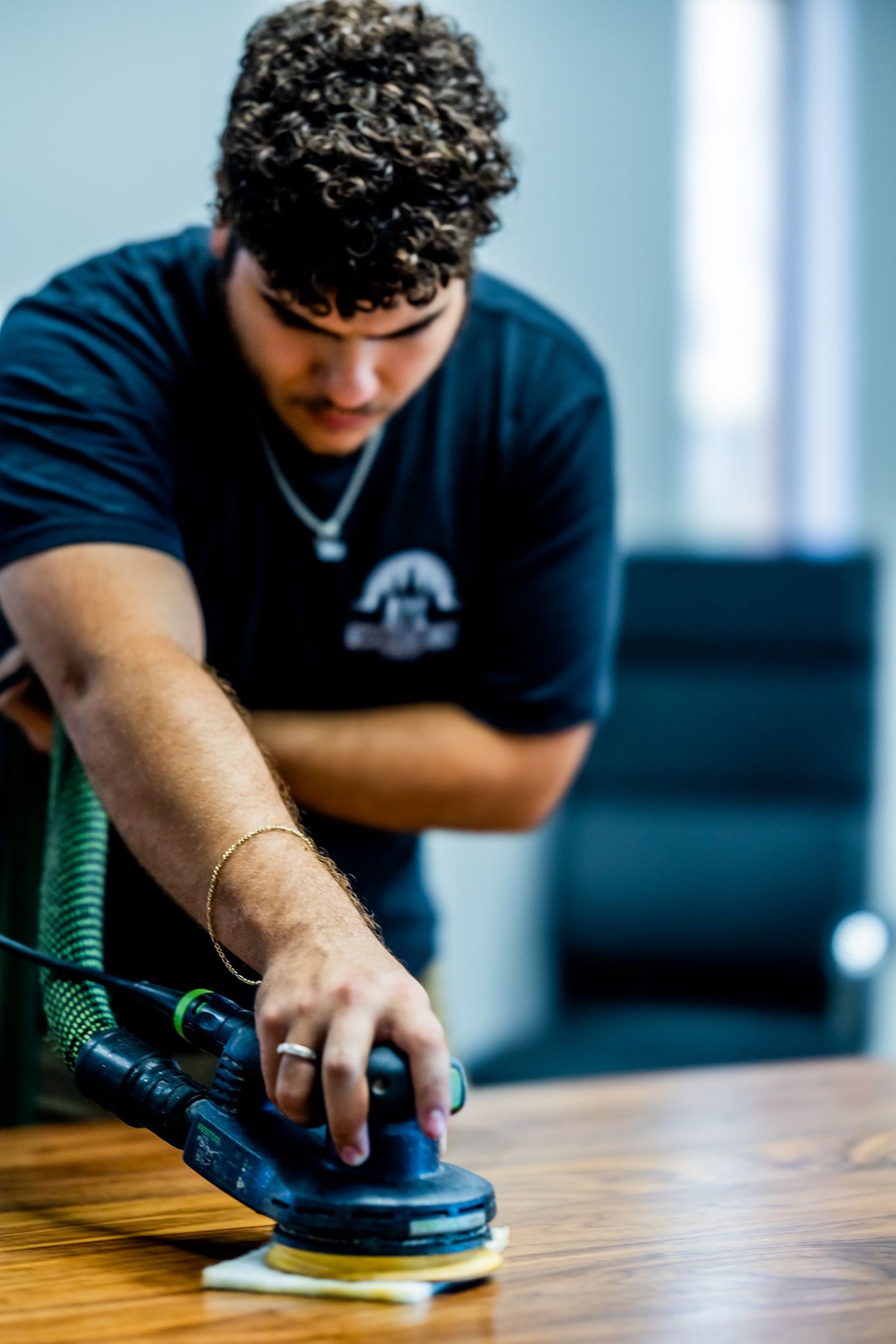
A wooden table can have an alarming white ring and still have years of useful life ahead of it. It can also look handsome from across the room and turn out to have a lifting veneer at the edge where people sit. Both deserve attention, but they call for different kinds. The first step is to find out what is failing, if anything. Taking a sander to the entire top because one patch looks cloudy can erase details that no repair will bring back.
Set aside the idea that the object has to look new. A kitchen table may hold a soft depression where elbows have rested for thirty years. That mark is not stopping the table from working. A sharp edge catching a sleeve, a loose leaf or a finish that transfers onto paper is another matter. Separate appearance from function, and work out what you actually want to improve before choosing an intervention.
See how the top was made
Look along the edge in natural light. On a plain solid board, the grain on the face and the end grain at the edge should make some physical sense together. A veneer is a thin layer of real wood applied over a different material. On a veneered top, a band or molding may hide that construction, and the grain may change direction at the edge. A printed laminate can imitate wood too. No single clue is decisive, so look at joints and the underside, and check the maker's details if available.
Do not peel a lifted corner to find out what is underneath. Photograph it with a ruler nearby and leave it alone until you know whether the layer is fragile. Thin veneer can be sanded through surprisingly quickly, especially at corners. Even a table described as solid wood can include veneered panels or decorative inlays. Look at each part as a different surface rather than relying on one description of the whole piece.
Extend a table leaf or look under a removable pad if there is one. The protected area can show what the color and gloss looked like before years of daylight and use. It is a reference, not necessarily a target. If the leaf and main top no longer match, decide whether that mismatch bothers you in real use. A dining table extended twice a year may not justify an aggressive attempt to make every board the same color.
Learn to look at the surface sideways
Switch off the ceiling light and hold a portable lamp low beside the top, without resting it on the table if it runs warm. Move it slowly and watch the reflection. A scratch in a glossy surface can flash white, then disappear when you move the lamp. An area that looks dark from above may be a worn patch with a different sheen, or something spilled into the wood. Changing the angle helps you tell a texture difference from a color difference.
Make a simple map. Use the shape of the table as an outline on paper and mark rings, scratches, rough edges and seams. Note anything that is sticky, powdery or loose without trying to scrape it. Photograph the whole top in ordinary room light, then photograph the specific mark you care about. When you return to the table tomorrow, the image can show whether the damage was always as obvious as it seemed at the end of a long evening.
Check whether the problem changes when the table is bare. Many marks matter only because they sit in the light stripe from a window. Rotate a removable lamp or place the table the way you intend to use it. A dark ring may remain objectionable; a few changes of sheen may disappear into the room. You are making a decision about a table in a place, not matching a color chip under inspection lights.
Start with maintenance, not chemistry
If you have the original care instructions, start there. Different finishes can react very differently to water, solvents, oils and even common furniture sprays. The color of a tabletop is a poor way to identify its finish. If you do not know what you have, remove loose dust gently with a clean, soft cloth and seek advice before putting a liquid or abrasive on an old, valuable or visibly unstable surface.
For a contemporary table with known care instructions, test the permitted cleaning method on an inconspicuous intact spot first. Look at it after it has fully dried before enlarging the area. Use as little moisture as the method calls for, avoid standing liquid near joints and do not rub through a patch of finish because a mark looks stubborn. Keep one cloth for the test and examine it. If color or finish comes off on the cloth, stop and reassess. Do not mix cleaning products or use an unverified internet remedy as a diagnostic.
Many common quick fixes trade one visible mark for a bigger problem. An oily product can darken exposed wood around a scratch and complicate a later coating. Heat intended to remove a ring can harm a film or affect glue below a veneer. A polish can make a dull table shiny for a few days while leaving residues that need to come off before other work. Identify what you have and what the manufacturer permits, or bring the photos to a furniture repair specialist. An hour spent choosing the least invasive option is cheap compared with undoing a new finish on the wrong surface.
Choose the smallest useful repair
A tiny worn patch at the end of a table may be better addressed locally than across the entire top. A wobbly table needs stable joinery before it needs a different sheen. If a leaf moves when you lean on it, stop using it in that position until the supports are understood and repaired. Loose veneer, deep cracks and failures at structural joints deserve separate decisions. A new surface coat will not hold any of them together.
Try to name the result in terms that another person could see. “The finish should stop catching a cloth on the front edge” is a clearer brief than “restore the table.” “The top should be usable for daily meals and still show the dark grain” leaves room for several solutions. If you ask for an estimate, show both the damage and the good areas you want to keep. Ask whether the proposed work will alter the sheen, round edges or remove any original surface. A sample on a separate piece with a comparable finish, when available, is more useful than a promise that a product dries clear.
Some tables are ordinary workhorses and some have original finishes, labels, inlays or other features that affect their value. If you cannot tell which kind yours is, get a qualified opinion before sanding, stripping or coating it. Older materials may have hazards, and stripping or refinishing can create dust, fumes or waste that needs proper controls. Follow the product instructions and local disposal requirements for any permitted work. There is no obligation to turn a small surface mark into a full weekend project.
Give the table a better working life
Look at what caused the wear you can prevent. The spot under a vase might benefit from a waterproof coaster and a change in watering habits. A laptop that drags grit across the surface might do better on a removable clean pad that does not trap moisture. Use heat protection suited to the temperature of cookware, and check that any backing material is compatible with the finish. Lift protective mats occasionally and check underneath rather than trusting a mat you never move.
At meals, keep the tools for a quick cleanup within reach. A spill left under a plate is harder on the table than a spill noticed immediately. Wipe it up according to the surface's care instructions. Remove tablecloths that have become damp, and let the top and cloth dry separately. If direct daylight is making one side fade more than the other, consider when curtains or shades can be used without making the room unpleasant to live in. A table is going to change over time; the aim is to make that change slow and even.
When the table is back in service, repeat the same photographs after a few weeks. You may discover that the mark you expected to repair has stayed stable, while the corner near the busiest seat is the part that needs help. A small record of actual wear gives you a better reason to act than a general wish to make the top look newer. The useful thing about an old table is that someone has already shown how it behaves under use. You can read the evidence before covering it up.
If you pass the table to someone else, pass on that record as well. Include the original care directions if you have them and the name of any product actually used. A note taped to a bag containing a removable leaf will survive longer than a text message about which polish you think worked. The next person can then distinguish a stable old mark from something that has changed on their watch.