Sorting a Room Without Filling the Hall
Clear one working area at a time and give each box a destination so the room can be used again at the end of the day.
The moment a room gets harder to use is often just after you decide to sort it. The cabinet doors are open, the rug is covered with objects from four different drawers, and the first box contains three things going upstairs and a fourth that might need repair. You are now using every clear part of the room to organize the space that was supposed to get clearer. A different approach starts by limiting how far the job can spread. Pick a part you can return to ordinary use in one session, give temporary boxes distinct purposes, and take each box as far as its contents allow before opening the next section of the room.
Begin with a result that can be seen tonight
Choose one activity that would be easier if the room were less crowded. Perhaps you'd like to eat at the table without moving a basket, open the low cupboard without shifting the chair, or sit down to mend clothes with everything needed to finish. Stand where you would do the activity and notice what interferes. That tells you which area to sort first. A drawer full of old cables may need work later, but emptying it has little value tonight if the main issue is the boxes occupying the chairs. Write down the concrete result. "The table can seat four by dinner" gives you a clearer place to stop than "sort the front room."
Find a small staging surface that can be cleared quickly. Use a tray, a clear side of a table, or a mat placed away from walking routes. Leave doors, steps, exits and access to equipment unobstructed. Put out only the boxes you can deal with in the session. Use manageable containers with reliable bottoms and a grip you can use without strain. If you find heavy things, move them with appropriate help or equipment. A box that is too heavy to carry makes the next task harder and is likely to stay where you filled it. Keep hazardous materials, sharp objects and sensitive documents out of any open mixed box.
Set a point at which you will stop taking more things out. Save time to return items, sweep or wipe the clear area and restore access to the furniture. If you have forty minutes, you might try twenty five minutes of sorting and use the rest to put the room back into service. Adjust to the situation rather than trying to complete a fixed number of drawers. Before stopping for an interruption, make sure anything easily damaged is in a suitable place and the people using the room can still walk through it. A project that can pause without creating a hazard is easier to return to the next day.
Mark the boxes with the next action
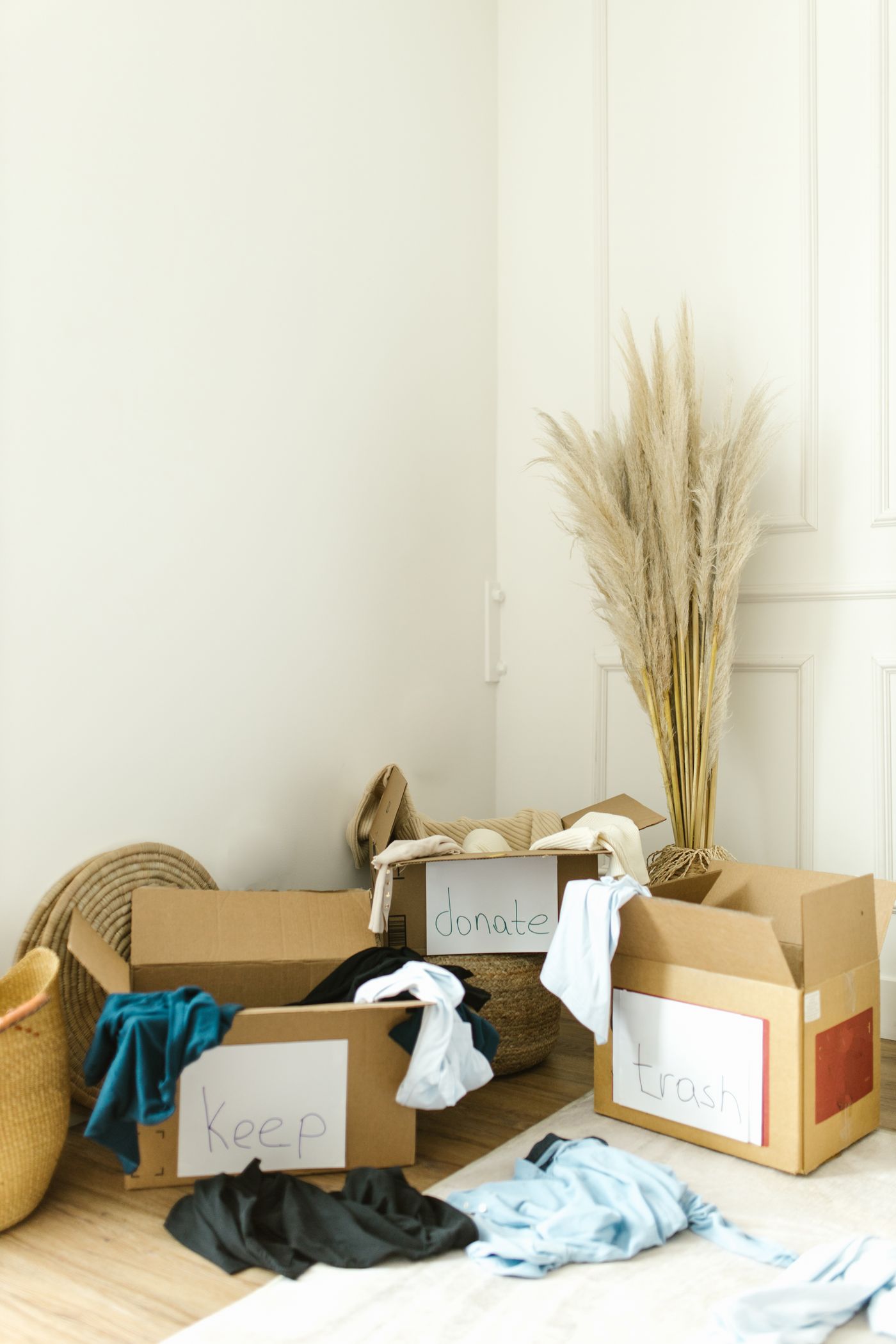
Prepare three containers or groups to begin. One can hold things that belong elsewhere, one can hold things leaving the household after suitable checks, and one can hold a limited set of unresolved decisions. Use paper labels that describe the action in plain language. If several things belong to the same other room, you can use a small bag inside the first box or bring them there together at the end. A label such as "to the sewing drawer" is especially useful when another person might empty it. The contents of a container should have something in common besides coming from the same shelf.
When you handle an object, try to finish its next small step. Put a book straight back on the shelf if it already has a place in the room. Pair a detachable part with the item it belongs to, and keep the set together until you decide where it goes. If you find something that someone else owns, set it aside safely and ask about it instead of deciding for them. If an item belongs to a current project, keep it with that project in a suitable place. An open pile of pieces rarely tells anyone whether the work should be continued, packed away or reviewed. One clearly marked container can keep the parts from mixing with belongings that have a different destination.
Don't use the leaving box as a substitute for checking what a recipient or collection will accept. Keep useful items in appropriate condition and find an actual destination. Arrange suitable disposal for materials that require special handling. Before selling, donating or disposing of electronics or paperwork, consider private information they may hold and use an appropriate way to remove or protect it. Keep any item that needs checking apart from the ready group. A box marked "ready to go" can leave today if you can trust what is in it. A box that requires looking at every item one more time is still part of the sorting job.
Limit the box for unsettled decisions
Some objects have real reasons to wait. You may need to compare a spare part with a similar one in another room. An item borrowed from someone needs to be returned when you next see them. A family object might need a discussion. Write a note that names the next action and when you expect to take it. Set aside a small number of these decisions and place them somewhere that allows you to revisit them without using the space you just cleared. If the container fills, stop and resolve one of its items before adding another. That physical limit makes it harder to turn everything uncertain into an indefinite storage category.
For a sentimental group, plan a separate short session. Choose one manageable collection, take it somewhere you can work without rushing, and think about the conditions needed to keep the items you choose. An old photograph deserves different storage from a temporary pile of spare screws. If other household members have an interest, make the session shared where appropriate. There is little reason to make an irreversible decision simply because you want to empty a surface quickly. The room can still improve while a small well identified set of items waits for proper attention. Mark where that set is and avoid burying it beneath more general storage.
Keep the unresolved box separate from anything waiting on transport. A bag that belongs in another room should be emptied during the same session where practical. If the destination there is full, stop long enough to learn why. You might be trying to put away an item where it never made sense, or need to free a little room for an existing category. Move only what can really be put away. Dropping the whole bag in a bedroom transfers the project and leaves no evidence of which decision is still missing.
Put things back where the action happens
Look at the useful area now that it is clear. Before setting containers in it, identify which objects need to be ready nearby. If the table is mainly for eating and occasional sewing, give the sewing tools a portable home close enough to collect, with an easy place to put them after the work. Leave the surface open between tasks. If a chair repeatedly collects things on their way to another room, find out where that journey stalls. A small agreed return container might solve it when people are busy. A large box left open beside the chair may simply move the pile down by a few inches.
Make a trial arrangement with boxes or trays you already have. Put the things used together in one place and set the heaviest items where they can be handled easily. Leave access to existing shelves and furniture. Measure before buying containers, including the room needed to lift a lid, reach a handle, or pull the whole box out. Use supports suited to the weight and follow any furniture instructions. If a new container would leave the rest of the shelf difficult to reach, rethink the group before buying it. The category, the position and the container should all support the same task.
Take away the temporary staging equipment as soon as the work is done. Empty the tray and fold or store the boxes you no longer need. Take leaving items to the destination you've arranged, or mark a specific collection or drop off plan and store them safely out of the way until then. Sweep or wipe the work surface as appropriate. The room should be ready for its main job as soon as the session ends. Keep one note of the next area to address, so you don't need to open a drawer to remember where you meant to start tomorrow.
Check what the room does after a week
Return to the original result. If dinner has been easy to set out all week, see whether the arrangement helped everybody who uses the table. If the same pile reappeared at one end, check what it contains. It may be a group of objects waiting on a single job, like parcels ready to be taken out. Give that job a specific time and a suitable temporary place. If belongings that supposedly have a home keep turning up on the table, check whether their assigned home is too far away or too awkward. Move the few things that repeatedly return rather than reorganizing everything around the last pile.
Move on to another area only when you can leave this one in working order. The next session can be as small as a single shelf. You know how long it takes to empty your transfer box and how many decisions you can make before attention wanders. You also know what a completed piece of the project feels like. It has an ordinary purpose again. People can eat, sit or work in the place you cleared, and the boxes point to tasks you know how to finish. There is no need to pull the whole room apart to make that kind of change twice.